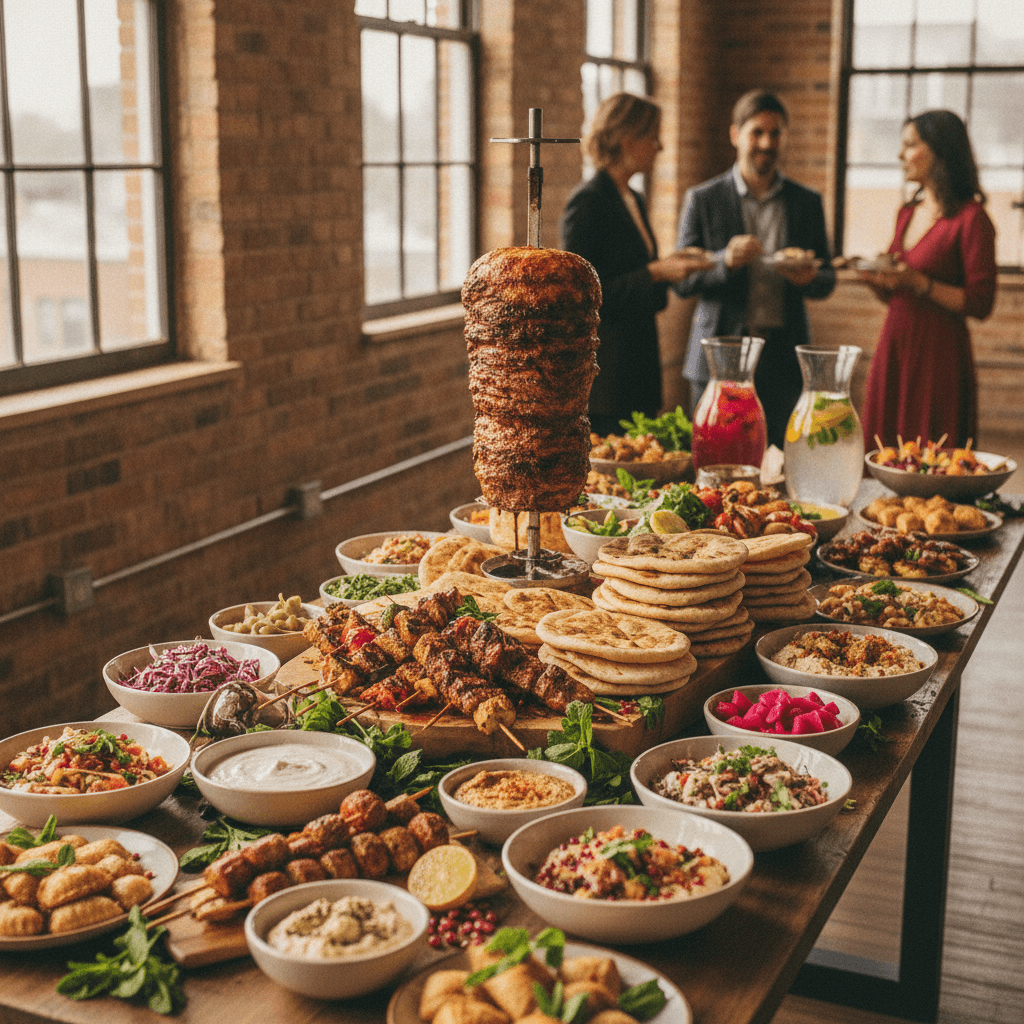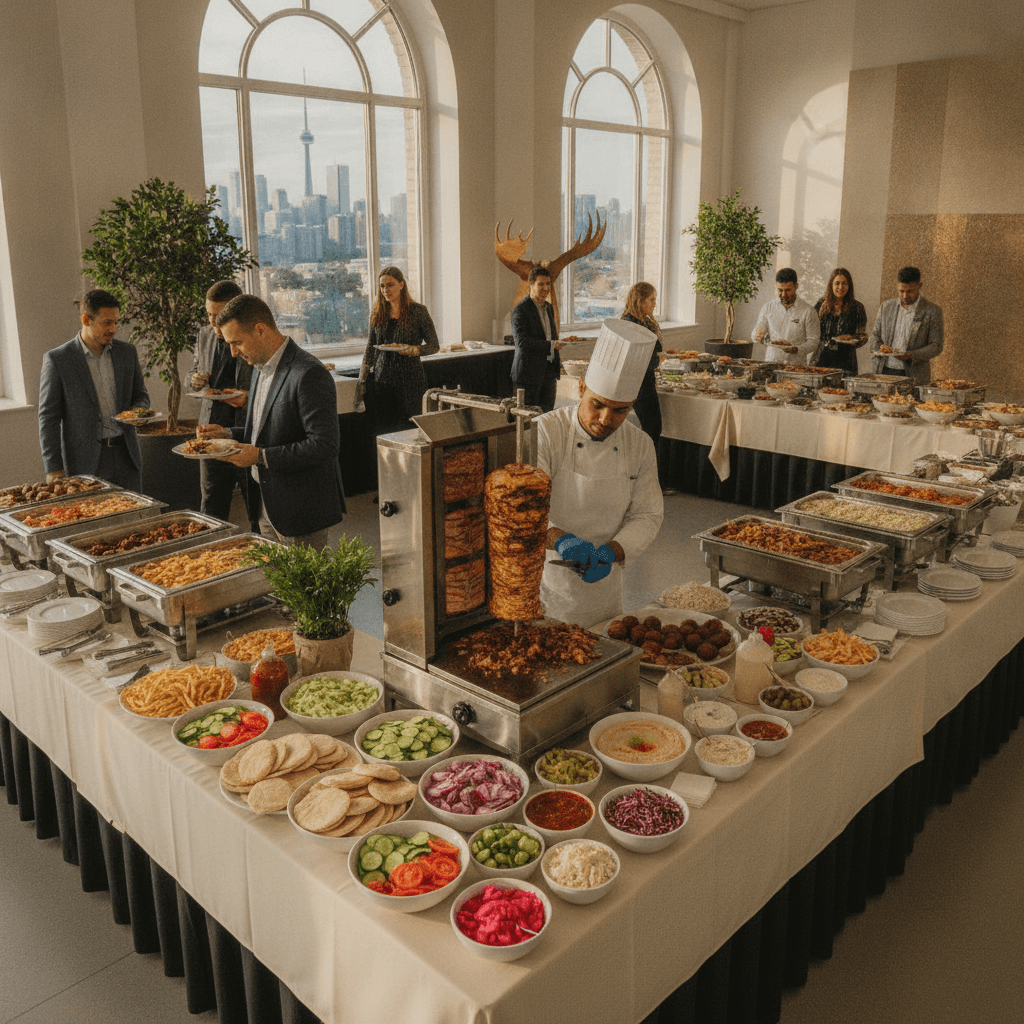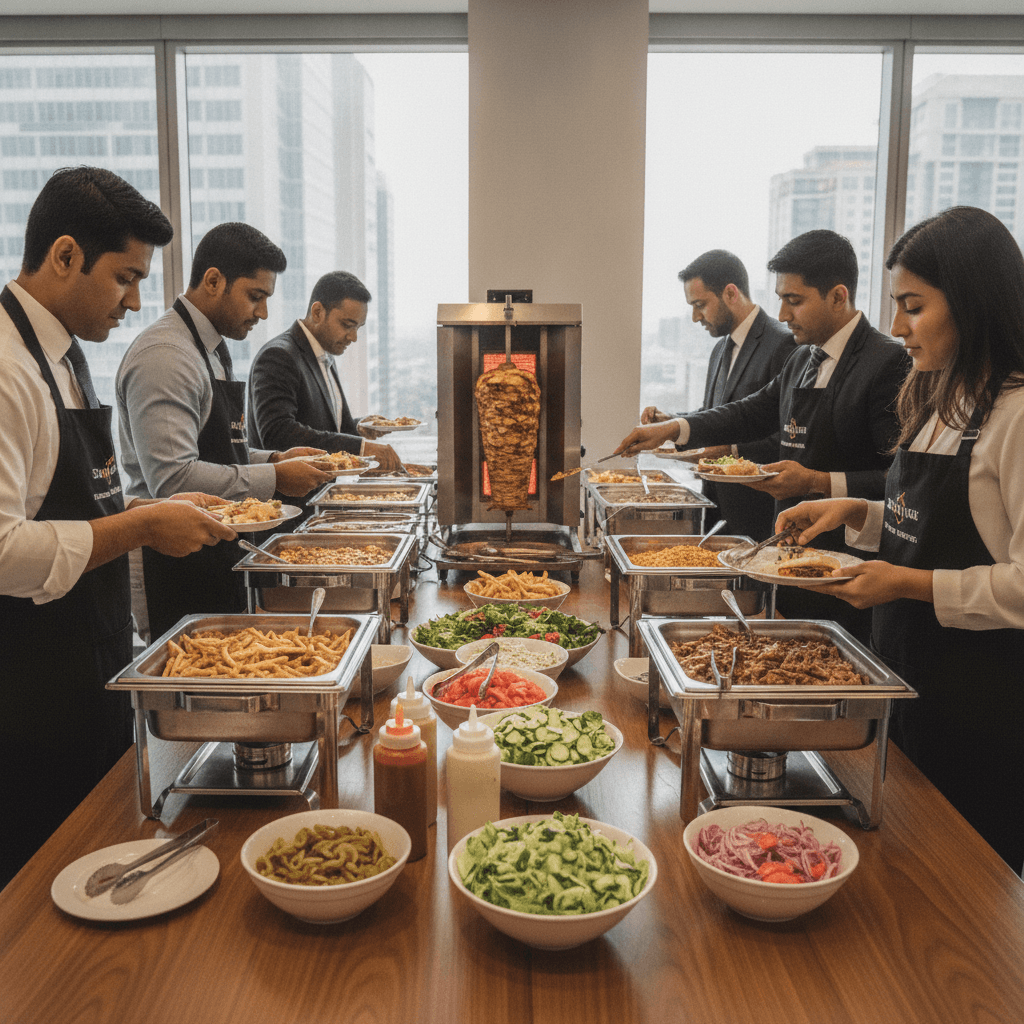

Catering menu planning for 20 people is the process of selecting a menu format, estimating portions, and coordinating logistics so every guest eats well without waste. For Old Toronto groups, shawarma and Turkish cuisine platters offer flexible proteins, vegetarian options, and easy service for offices and private gatherings.
By The Shawarma Moose Team • Last updated: 2026-08-03
| City | Toronto (Old Toronto) |
|---|---|
| Service areas | Toronto, Mississauga, Brampton |
| Cuisines | Shawarma, Turkish cuisine |
| Order options | Online food delivery, Pickup orders |
| Catering types | Catering services, Corporate event catering, Private event catering |
| Website | shawarmamoose.ca |
Overview
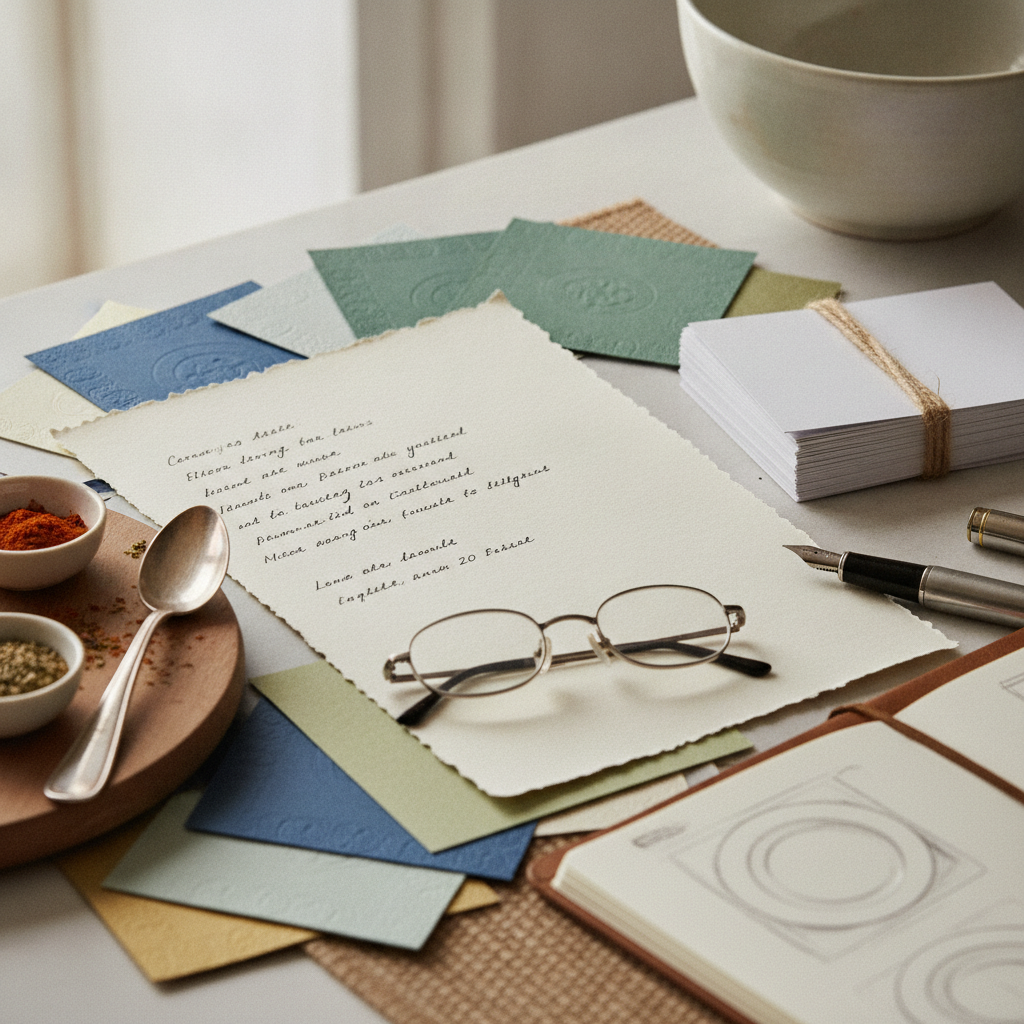
Plan for 20 by picking a service format, anchoring the menu with shawarma proteins, and covering key dietary needs. Use simple portion rules for proteins, sides, and bread, then lock in pickup or delivery timing. This keeps variety high, waste low, and service fast. For more context, see https://www.shawarmamoose.ca/buffet-style-office-catering. For more context, see How to Pick the Right Catering Package in 2026.
This guide translates proven Middle Eastern catering patterns into an easy framework for groups of 20. You’ll find portion logic for shawarma and mezze, a step-by-step plan, and Toronto-specific tips so your office lunch or family celebration runs on time.
What is catering menu planning for 20 people?
It’s a structured approach to feed 20 guests: choose a format (buffet or boxed), select proteins and sides, estimate portions, and coordinate pickup or delivery. A clear plan avoids shortages, minimizes waste, and ensures dietary needs are respected. For more context, see https://www.shawarmamoose.ca/product/Catering-in-toronto/52.
Shawarma Moose supports flexible formats—from buffet platters to compact boxed meals—so you can match the setting, from corporate meetings to private parties. The aim is balance: familiar flavors, vegetarian coverage, and service that fits your space.
How much food do you actually need for 20 people?

For 20 guests, plan generous shawarma proteins, two to three hearty sides, sauces, and ample bread. Balance chicken or mixed proteins with vegetarian mezze so every plate feels complete. Simple portion rules keep the menu satisfying without creating waste. For more context, see https://www.shawarmamoose.ca/product/build-your-own-catering/54.
Think in components: a protein anchor (shawarma), recognizable sides (salads, rice, potatoes), and signature sauces. Add vegetarian staples so mixed groups can build full plates without special handling. This approach scales cleanly for offices and home gatherings.
How to plan catering for 20: step-by-step
Use a six-step workflow: pick format, choose the protein anchor, calculate portions, cover dietary needs, finalize sides and bread, and confirm logistics. This sequence prevents gaps, aligns with your space, and keeps service on schedule. For more context, see https://www.shawarmamoose.ca/product/corporate-catering/53.
- Choose format: buffet-style platters or individual boxed meals.
- Anchor proteins: select shawarma options aligned to your group.
- Estimate portions: set quantities for proteins, sides, sauces, and bread.
- Cover diets: include vegetarian mezze and label common allergens.
- Lock sides: add balanced salads, grains, and potatoes.
- Confirm logistics: pickup, delivery, or on-site setup with timing.
Step 1: Choose your catering format (plated vs. buffet-style)
Select buffet platters for flexibility and speed, or boxed meals for portion control and easy distribution. Match the format to your space, timeline, and seating. For 20, buffets suit shareable mezze; boxes shine for seated meetings with minimal cleanup.
Ask two questions: Do you have space for a serving line, and do guests eat at once or in waves? Buffet platters are ideal for varied appetites and quick setup. Boxed meals help coordinators distribute food fast in conference rooms without serving utensils.
| Format | Best for | Why it works |
|---|---|---|
| Buffet platters | Casual offices, family-style gatherings | Guests self-serve; easy to add vegetarian mezze and sauces. |
| Boxed meals | Boardrooms, trainings, transit-limited venues | Fast handout, minimal surfaces, clear portions. |
Step 2: Build your core menu around a protein anchor
Center the menu on shawarma proteins, then layer sides and sauces. A chicken-first mix satisfies most groups; add a vegetarian mezze set so non-meat eaters build complete plates without compromise.
Shawarma proteins pair with salads, grains, and warm bread. Keep the number of core items tight to speed serving. For meetings, consider individual boxes anchored by shawarma with balanced sides; for parties, platters make customization effortless.
Step 3: Calculate portions for shawarma and mezze-style dishes
Use simple ratios: plan ample protein, two to three sides, generous bread, and sauces in clearly labeled containers. This keeps plates consistent and helps mixed appetites feel satisfied without over-ordering.
Portion rules help you avoid last-minute add-ons. Keep the set compact: a primary protein, a vegetarian pathway through mezze, and recognizable sides. Labeling sauces and vegetarian items increases speed and reduces duplicate questions from guests.
Step 4: Cover dietary needs without overcomplicating the menu
Design a parallel vegetarian path and label common allergens. Separate serving utensils for meat and vegetarian trays to reduce cross-contact and keep lines moving smoothly.
Clear signage prevents bottlenecks and helps guests feel welcome. For allergy awareness and safe labeling practices, consult guidance from nationally recognized authorities. Your goal is clarity, not dozens of SKUs—one vegetarian path, well-executed, is enough for groups of 20.
Step 5: Finalize sides, sauces, and bread quantities
Choose two salads or hot sides, add a grain or potato, and include ample pita or similar bread. Pair with a small set of signature sauces so guests can customize without crowding the table.
Consistency matters more than sheer variety. Combining fresh salads with a warm side creates balance, while a familiar grain anchors the plate. Keep the sauce set concise; clear labeling speeds throughput and helps guests find their favorites quickly.
Step 6: Confirm logistics — pickup, delivery, or on-site setup
Decide early between pickup and delivery, then confirm access details, timing, and serving space. For 20 guests, a single service window and a simple table layout usually suffice.
Plan the table flow: plates first, then proteins, sides, and sauces, with bread at the end. Keep hot foods hot and cold foods cold, and assign one organizer to receive the order so nothing is missed during drop-off or pickup.
Local considerations for Old Toronto
- Transit timing: If guests arrive via Dufferin or Ossington stations, stagger service by a few minutes to ease lines.
- Seasonal pace: Winter events benefit from boxed meals to reduce outdoor queuing and speed handoff.
- Space planning: Compact buffet lines work well near neighborhood venues and parks; keep pathways clear for quick service.
Tools and resources
Use a one-page run sheet, a labeled menu card set, and a clear pickup or delivery window. Add a simple portion guide so volunteers or coworkers can restock trays efficiently.
- Run sheet: timeline, receiving contact, building access notes, and service order.
- Menu cards: clear names and dietary notes for proteins, sides, and sauces.
- Tray map: a quick diagram for buffet flow and replenishment order.
- Online ordering: finalize items and timing in one place.
Decision scenarios for 20 guests
Match the menu to the moment: fast corporate lunches often favor boxed meals; family celebrations enjoy shareable platters. Keep a vegetarian pathway and concise sauces in both cases to streamline service.
- Corporate lunch: Individual boxes anchored by shawarma, plus labeled vegetarian boxes for easy distribution.
- Home celebration: Buffet platters with proteins, two salads, a grain, and bread—simple to set out and replenish.
- Hybrid meeting: Mix boxes for presenters with a small platter set for drop-ins.
FAQ: Catering for 20 People in Toronto
For 20 guests, choose a format, set portions, and confirm logistics. Keep a vegetarian path and label allergens. The answers below cover format choice, dietary coverage, and timing.
Is a buffet or boxed meals better for 20?
Both work. Buffets offer flexibility and quick service for mixed appetites. Boxed meals speed handout and reduce cleanup in meeting rooms. Choose based on your space, seating, and whether guests arrive all at once or in waves.
How do I cover vegetarian and allergy needs without complicating the order?
Create one strong vegetarian pathway with mezze and label common allergens on menu cards. Keep separate utensils for meat and vegetarian trays to reduce cross-contact, and group sauces so guests can personalize plates without crowding the line.
What’s the simplest way to keep service moving?
Set the buffet in this order: plates, proteins, sides, sauces, then bread. Use clear labels and assign one organizer to receive and check the order. For seated meetings, pre-assign boxes by seat or name to avoid crowding.
Can this plan work for both offices and private events?
Yes. The framework scales to corporate lunches and private celebrations. Keep the core menu consistent, adjust sides to the occasion, and confirm either pickup or delivery timing based on your venue access.
Conclusion
For groups of 20, a clear plan—format, protein anchor, portions, dietary labels, and logistics—delivers a smooth, satisfying meal. Keep variety focused, labeling clear, and timing confirmed.
Key takeaways
- Choose buffet platters for flexibility or boxed meals for speed.
- Anchor the menu with shawarma proteins plus a vegetarian mezze path.
- Limit sauces and sides to a concise, well-labeled set.
- Confirm pickup or delivery details and table flow in advance.
Planning a 20-person lunch or celebration in Old Toronto? Explore menu options and reach our team to align portions and timing for your space.