The biggest mistakes when booking catering are unclear headcounts, last-minute orders, and missing dietary details. In Old Toronto, confirm venue access and delivery windows early. Choose a caterer with labeled packaging, a clear service plan, and reliable communication to prevent delays and food waste. This guide shows you how.
By Shawarma Moose • Last updated: July 3, 2026
At a Glance: Summary
Avoid catering headaches by locking your guest count, documenting dietary needs, and booking 10–14 days ahead. Align delivery timing with venue access, assign a food lead, and confirm serving gear. For Old Toronto events, verify loading options and transit timing to keep food hot and on schedule.
Here’s the quick hit list we use when helping teams plan with Shawarma Moose catering.
- Finalize a realistic headcount (plan a 5–10% buffer for last-minute guests).
- Capture dietary needs in writing: vegetarian, vegan, gluten-free, dairy-free, halal-friendly.
- Book at least 10–14 days out for groups; earlier for peak dates.
- Align delivery/setup windows with venue access; share elevator/loading details.
- Decide service style: drop-off buffet, individually boxed, or staffed service.
- Assign a single point of contact to receive and stage food.
- Confirm utensils, chafers, serving spoons, and labels before event day.
- Request labeled packaging so guests can spot allergens and preferences fast.
Local considerations for Old Toronto
- Weekend afternoons near Ossington can be busy; add a 15–20-minute delivery buffer for traffic and staging.
- Outdoor picnics at Dufferin Grove Park? Ask for insulated carriers and cooler-safe salads to handle warm days.
- Historic buildings may have narrow access; confirm stair/elevator dimensions for safe tray movement.
What Is “Booking Catering”?
Booking catering is the process of securing a food provider for an event, including menu selection, headcount, dietary accommodations, logistics, and service style. A good booking clarifies who eats, what’s served, when it arrives, and how it’s set up and cleaned up.
Booking isn’t just placing a food order. It coordinates people, portions, timing, and equipment so your meeting or celebration runs smoothly.
- Inputs: date, time, address, guest count, dietary needs, service style, and budget constraints.
- Decisions: menu mix (proteins, sides, salads), beverage plan, drop-off versus staffed, reusable versus disposable ware.
- Outputs: confirmed schedule, labeled menu, setup plan, and a single point of contact.
At Shawarma Moose, we align these details with our shawarma platters, Turkish meze, salads, warm pita, and sauces so every guest finds something they love.
Why Mistakes When Booking Catering Matter
Booking mistakes cascade into food waste, cold meals, and frustrated guests. Fixing them early protects your timeline, keeps food hot, and ensures every guest—vegan to halal-friendly—feels included. Strong planning reduces last-minute stress and improves the event’s overall experience.
Small missteps have outsized impact on event day. A 15-minute loading delay can push lunch into a meeting slot. One missed allergy note can sideline a teammate’s meal. Over-ordering by 15% leads to waste; under-ordering creates awkward shortages.
- Guest experience: labeled, inclusive options reduce decision delays and crowding.
- Hot-hold windows: aim to serve entrées within 45–60 minutes of arrival for best texture.
- Flow efficiency: clear buffet layout can speed 50 people through lunch in about 10 minutes.
We’ve found that clear instructions—“line starts here,” “vegetarian first,” “sauces at the end”—shave minutes off queue time and keep food lines moving.
How Booking Works: Step-by-Step
Successful catering bookings follow a repeatable flow: define goals, capture headcount and diets, select service style, confirm logistics, book the date, and reconfirm 72 hours before. This sequence prevents surprises and locks in portions, gear, and timing.
Use this process to make sure nothing slips.
- Define the event outcome: networking, training, celebration. The goal drives menu choices and pacing.
- Lock a headcount range: expected, minimum, and stretch (+10%). Build your portions from the expected number with a small buffer.
- Collect dietary needs: one shared doc for vegan, vegetarian, gluten-free, dairy-free, and halal-friendly requests.
- Choose service style: drop-off buffet, individually boxed, or staffed buffet. Match to space and schedule.
- Pick a balanced menu: two proteins (e.g., chicken shawarma and falafel), two sides, one salad, warm pita, sauces.
- Map logistics: delivery window, loading instructions, elevator access, table locations, trash plan.
- Book the date: send the full brief and confirm the schedule in writing.
- 72-hour reconfirm: send final headcount and any late changes; align on utensils, labels, and serving gear.
- Day-of execution: stage tables, set line direction, and keep hot items together; announce dietary labels upfront.
Need a package that fits this flow? Explore our catering options to see how we structure platters and service styles for Old Toronto teams.
10 Common Mistakes When Booking Catering (And How to Fix Each)
The most common booking mistakes include vague headcounts, ignoring dietary needs, booking too late, mismatched service style, poor venue details, and no assigned food lead. Fix them with early planning, written notes, and a 72-hour reconfirmation checklist.
- 1) Unclear headcount: order for the expected number, then add 5–10% for buffer. Keep a live RSVP list.
- 2) No dietary plan: collect needs early; ensure vegetarian and gluten-free choices are visible and labeled.
- 3) Last-minute booking: aim 10–14 days out for groups; earlier for holidays and graduation weeks.
- 4) Wrong service style: boxed meals for tight agendas; buffet for social events; staffed when space is tight.
- 5) Missing logistics: delivery window, loading dock, elevator size, table placement, and power (for warmers).
- 6) No gear plan: confirm chafers, serving tongs, plates, napkins, and trash solutions.
- 7) Unlabeled food: guests hesitate; lines slow. Ask for clear labels on entrées and sauces.
- 8) Poor table flow: proteins first, then sides, then salads, then sauces to speed the line.
- 9) No point person: designate a receiver to sign for delivery, stage the setup, and direct the line.
- 10) Ignoring weather: if outdoors, use insulated carriers and wind-friendly setups; shade salads on hot days.
If your event is heavily scheduled, consider individually packaged meals; see our individual catering options for tightly timed agendas.
Service Styles and When to Use Them
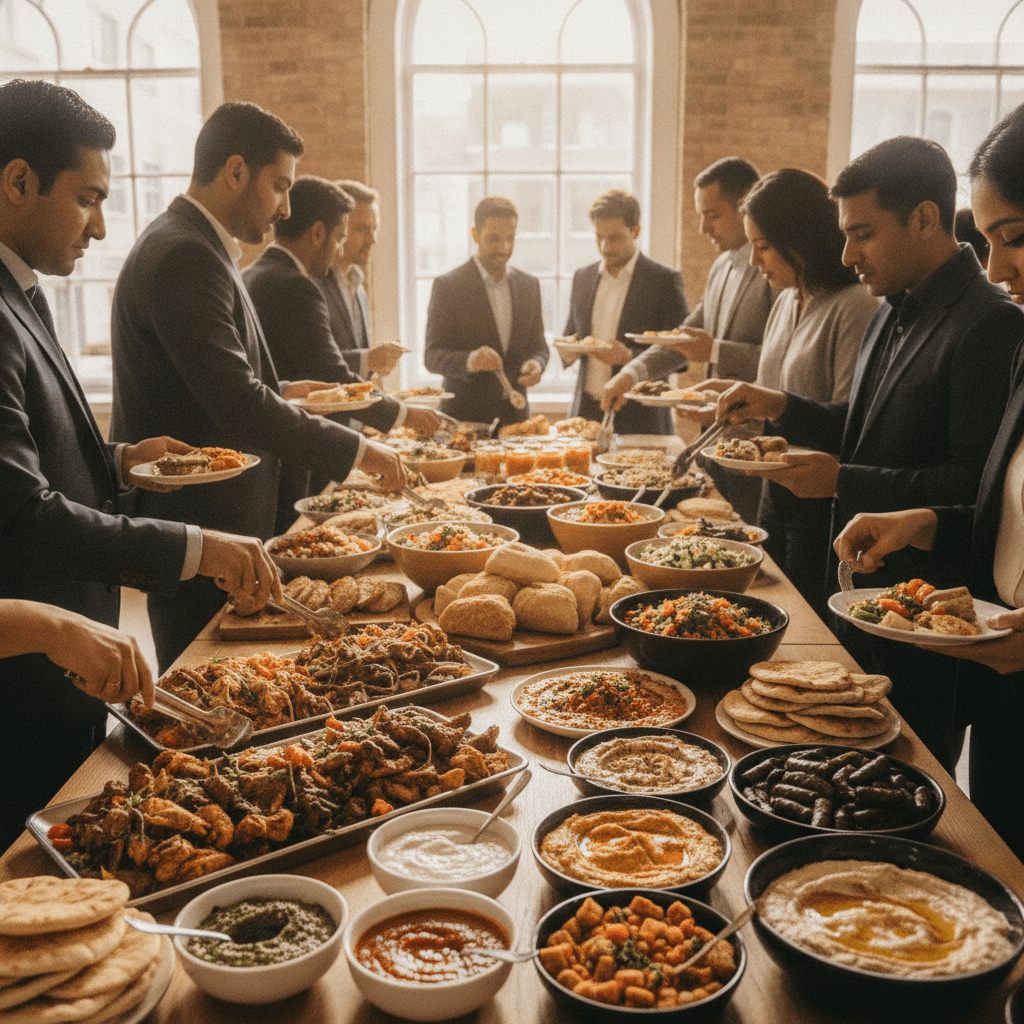
Choose drop-off buffet for casual groups, individually boxed for tight agendas, and staffed buffet for premium flow or limited space. The right style depends on timing, venue access, and how quickly you need 30–200 guests served.
Match the service format to the room and schedule.
| Service Style | Best For | Pros | Consider |
|---|---|---|---|
| Drop-off buffet | Team lunches, social mixers | Fast to set, flexible portions, good variety | Needs table space; assign a host to restock |
| Individually boxed | Training days, back-to-back meetings | Precise counts, easy distribution, minimal gear | Less buffet variety; ensure labels are clear |
| Staffed buffet | Premium events, tight rooms | Controlled portions, smooth flow, tidy line | Coordinate staff arrival and on-site space |
For buffet-style setups, review our buffet office catering tips and match them to your room layout and line direction.
Menu Planning for Inclusive Options
Plan menus with at least two entrée choices and clear vegetarian or vegan options. Pair proteins with sides and salads that hold well, and label allergens. Balanced platters reduce leftovers and keep the line moving because choices are obvious at a glance.
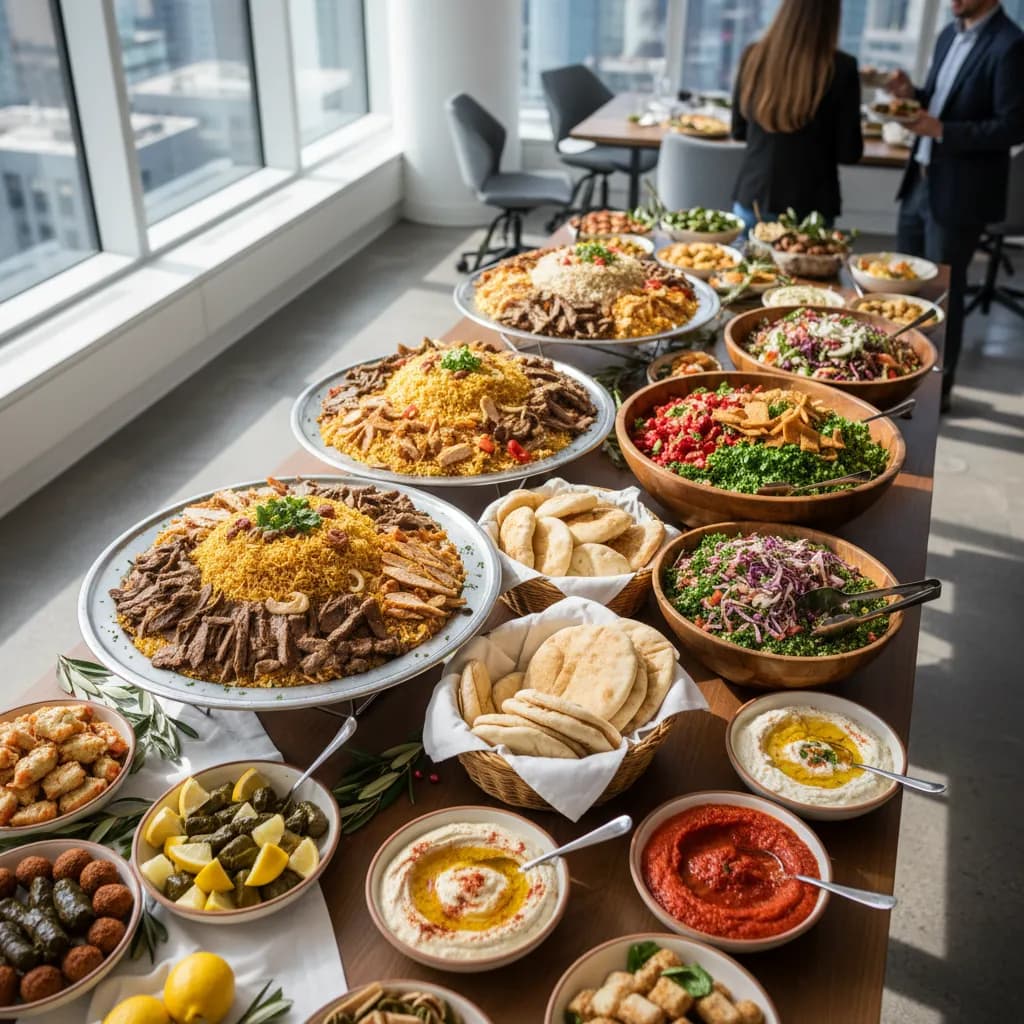
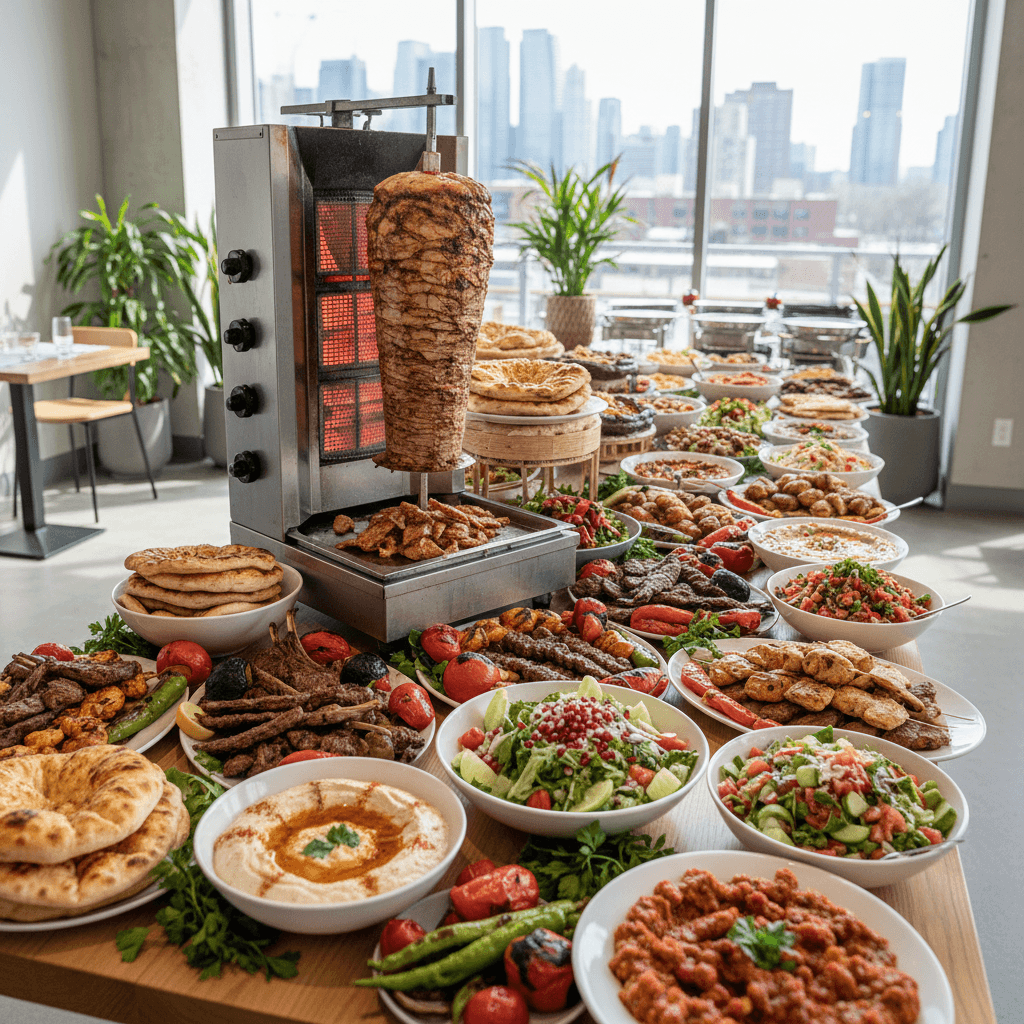
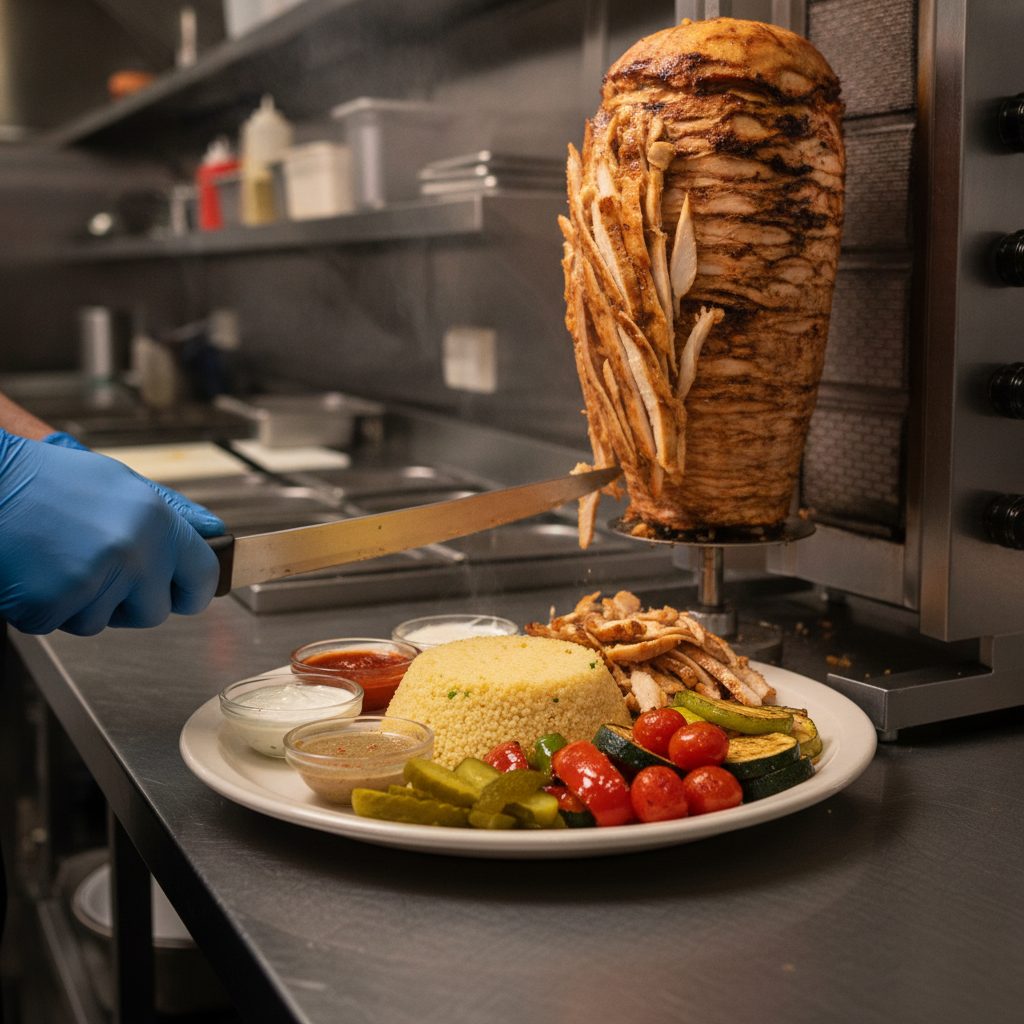
Our most reliable spread in Old Toronto offices looks like this:
- Proteins: chicken shawarma and falafel (vegetarian).
- Carbs: warm pita and seasoned rice or bulgur.
- Sides: roasted vegetables and hummus.
- Salads: a hearty option (e.g., tabbouleh or chopped salad).
- Sauces: garlic, tahini, and hot sauce—clearly labeled.
Guests decide faster when every pan has a simple label and vegetarians can spot “their” items immediately. For customizable spreads, see our build-your-own catering option.
Timelines and Logistics (Don’t Skip These)
Work backward from serve time. Target delivery 30–45 minutes before guests eat, confirm loading and elevator access, and assign a receiver. A 72-hour reconfirmation locks counts, labels, and gear, preventing last-minute confusion.
We start with when the first plate should be served, then reverse-engineer the day.
- Serve-time minus 45 minutes: delivery window begins; staging tables in place.
- Serve-time minus 20 minutes: hot pans positioned together; salads chilled; labels set.
- Serve-time minus 5 minutes: announce dietary notes; open the line.
- 72 hours prior: finalize guest count, vegan/vegetarian numbers, and any allergen notes.
- Day-of contact: share cell number for the receiver; keep entrance clear for carriers and trays.
For broad menus and larger groups, our corporate catering packages align portions and labeling to predictable office flows.
Packaging, Labeling, and Food Safety
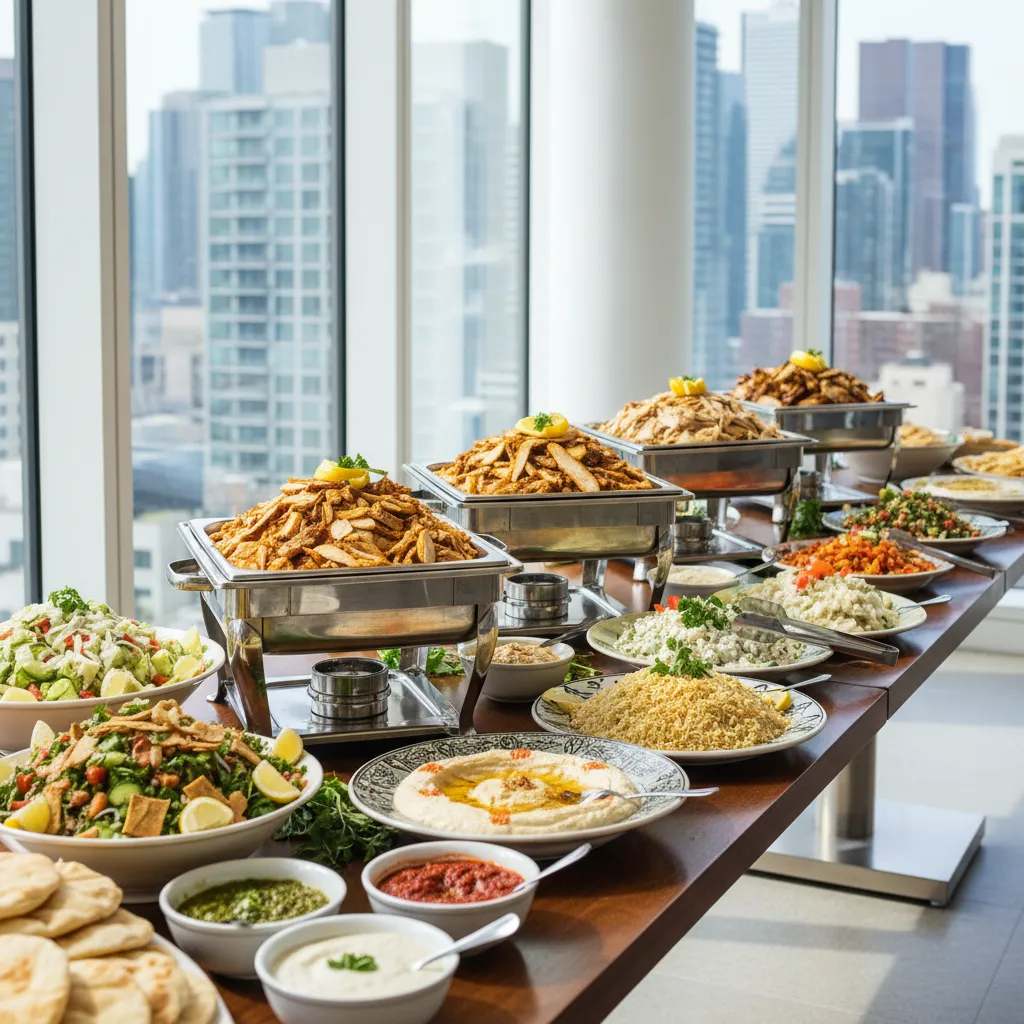
Clear labels reduce line slowdowns and help guests with restrictions choose fast. Keep hot foods grouped, cold foods chilled, and use insulated carriers for travel. Simple station cards—protein, vegetarian, gluten-aware—boost speed and confidence.
Labels aren’t decoration; they are wayfinding. When guests can spot “Vegetarian” and “Contains Dairy” without asking, lines halve in time. Grouping hot pans together maintains temperature; salads and sauces belong on a separate table or the line’s end.
- Label types to request: entrée name, dietary cue (vegetarian/vegan), and common allergens.
- Staging: keep hot items clustered; use lids between waves; position salads away from heat.
- Transport: insulated carriers for hot items; cooling packs for perishable salads on warm days.
Want a preview of how our packages arrive? Review the trays and pans shown in our Toronto catering selection for a sense of labeling and containers.
Tools, Templates, and Checklists
Use a one-page brief, a headcount tracker, and a day-of run sheet. Centralized notes prevent confusion and keep your food plan aligned with the agenda and room flow.
Here are the planning tools we recommend and use internally.
- One-page event brief: date, serve time, headcount, diets, service style, venue access, equipment list.
- Headcount tracker: expected, minimum, stretch (+10%), vegetarian/vegan counts, boxed vs. buffet split.
- Room map: table placement, line direction, power access, trash/recycling spots.
- Run sheet: delivery window, receiver name/number, setup timing, announcements, cleanup notes.
For menu inspiration and portion predictability, skim our catering page and the build-your-own option to see how pieces fit together.
Case Studies from Old Toronto
Real teams in Old Toronto avoid common catering mistakes by clarifying headcounts, labeling vegetarian options, and aligning delivery to venue access. These brief cases show how planning details turn into smooth service on event day.
Tech sprint lunch near Ossington: 48 attendees with a 60-minute window.
- Ordered chicken shawarma + falafel; two sides, one salad, warm pita, and sauces.
- Individually boxed for speakers; buffet for others—served the room in 12 minutes.
- Outcome: zero shortages; vegetarian guests served first to manage line speed.
Community celebration by Dufferin Grove Park: outdoor setup with shade tents.
- Insulated carriers for hot items; salads staged on a separate table with ice packs.
- Wind-friendly buffet layout; sauces at the end to keep the line moving.
- Outcome: steady flow; guests ate within 10 minutes of arrival.
Quarterly all-hands in a heritage office: narrow stairwell, limited elevator.
- Delivery 45 minutes pre-serve; receiver guided carriers to a staging room.
- Simple station labels—protein, vegetarian, gluten-aware—reduced questions.
- Outcome: hot food, tidy setup, and a clean breakdown in 15 minutes.

How to Avoid Stress on Event Day
Assign one food lead, stage tables before arrival, and open the buffet in a clear direction. Share dietary labels first, seat vegetarians near their options, and keep hot pans clustered. These moves cut lines and keep meals hot.
- One receiver: a single point person avoids crossed signals at the door.
- Tables ready: set in advance with tablecloths, risers, and space for labels.
- Line design: proteins first, sides next, salads after, sauces last.
- Announcements: 15-second cue for dietary notes; let boxed meals pick up first.
- Refill plan: store backup pans near the line to swap quickly.
For structured office agendas, our corporate catering packages bundle the utensils, labels, and portions that keep large teams moving.
When to Book and What to Confirm
For most office groups, book 10–14 days ahead and reconfirm 72 hours before serve time. Share venue access notes, elevator size, and table locations. Early clarity locks in the right portions, packaging, and serving gear.
- Lead time: 10–14 days for 25–100 guests; earlier for holidays and graduation season.
- Reconfirm: 72 hours prior with final counts and any late dietary changes.
- Access: loading zone, elevator size/availability, stairs, and room distance from entrance.
- Gear: chafers, serving spoons, plates, napkins, and trash plan.
If plans change, share updates in one message thread so the latest details are clear and timestamped.
Frequently Asked Questions
You can avoid most booking mistakes by confirming headcount and diets early, choosing the right service style, and reconfirming logistics 72 hours before the event. Clear labels and a single point of contact keep service smooth.
How far in advance should I book catering?
For most office lunches and small parties, 10–14 days works well. Peak weeks and larger headcounts benefit from more lead time. Always reconfirm 72 hours before serve time with final counts and dietary notes.
What’s the fastest way to avoid shortages?
Order for your expected headcount and add a 5–10% buffer. Include one vegetarian entrée that satisfies omnivores too—falafel bowls work well—so extra demand doesn’t overload a single dish.
Buffet or boxed meals—which is better?
Choose boxed when schedules are tight or seating is fixed; pick buffet for social energy and variety. Staffed buffets shine in compact rooms because portions and pace are controlled at the table.
How do I communicate dietary needs to the caterer?
Use a shared document that lists vegetarian, vegan, gluten-free, dairy-free, and halal-friendly needs alongside guest names. Send it with your booking and update it at the 72-hour reconfirmation.
Key Takeaways
Confirm headcount and diets, match service style to your space, and reconfirm logistics 72 hours ahead. Clear labels and a single on-site lead keep lines fast and food hot—making your Old Toronto event smooth and memorable.
- Lock the numbers; add a small buffer.
- Plan inclusive menus with obvious vegetarian options.
- Book early; reconfirm at 72 hours.
- Stage the room before food arrives; design the line.
- Use labeled packaging to speed decisions.
Next Steps
Choose your service style, jot your headcount and diets, and confirm delivery access. Then book your date and request labeled packaging. A short reconfirmation call 72 hours out keeps everything on track.
Ready to plan? Explore our catering page and consider corporate catering or build-your-own to match your agenda and room.
Soft CTA: Planning a meeting or celebration in Old Toronto? Our team helps you avoid common pitfalls—dietary planning, setup flow, and labeled packaging included.
Browse catering options or review our Toronto catering selection to get ideas.