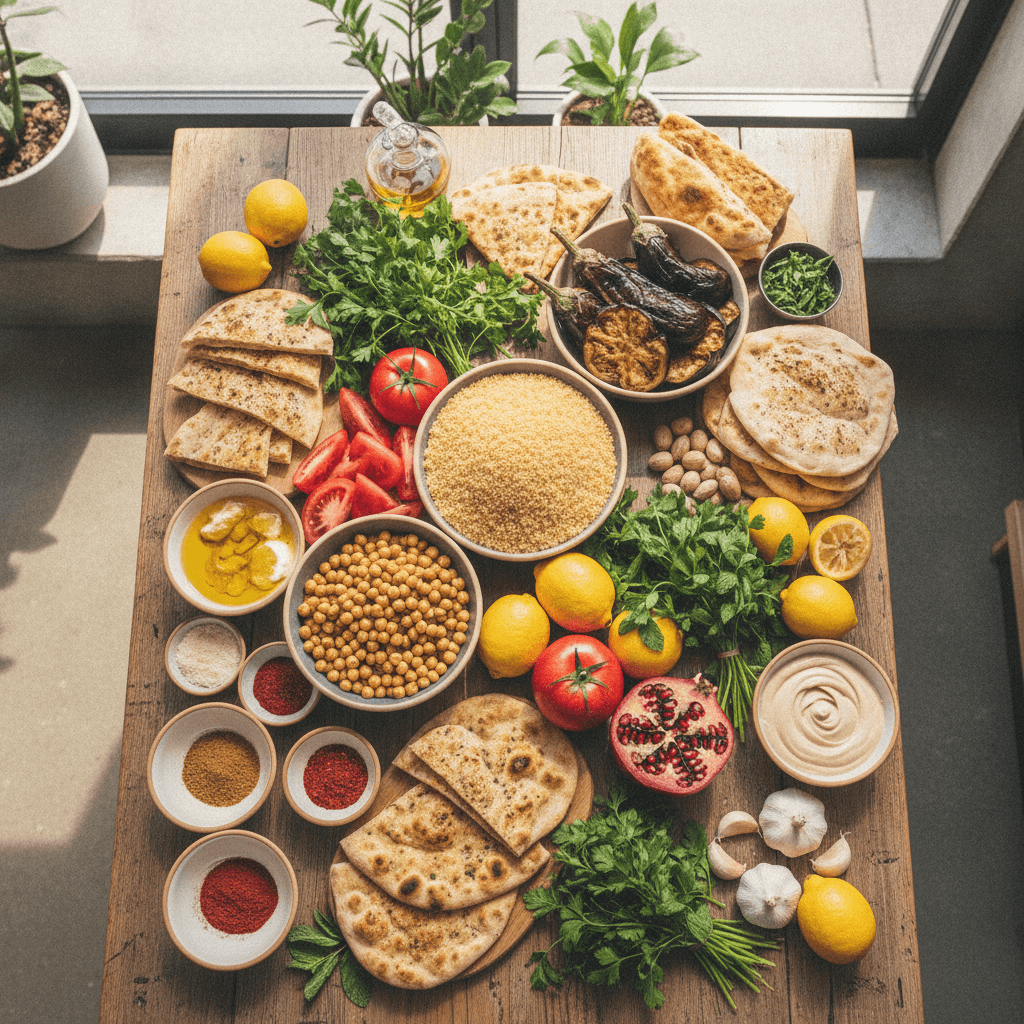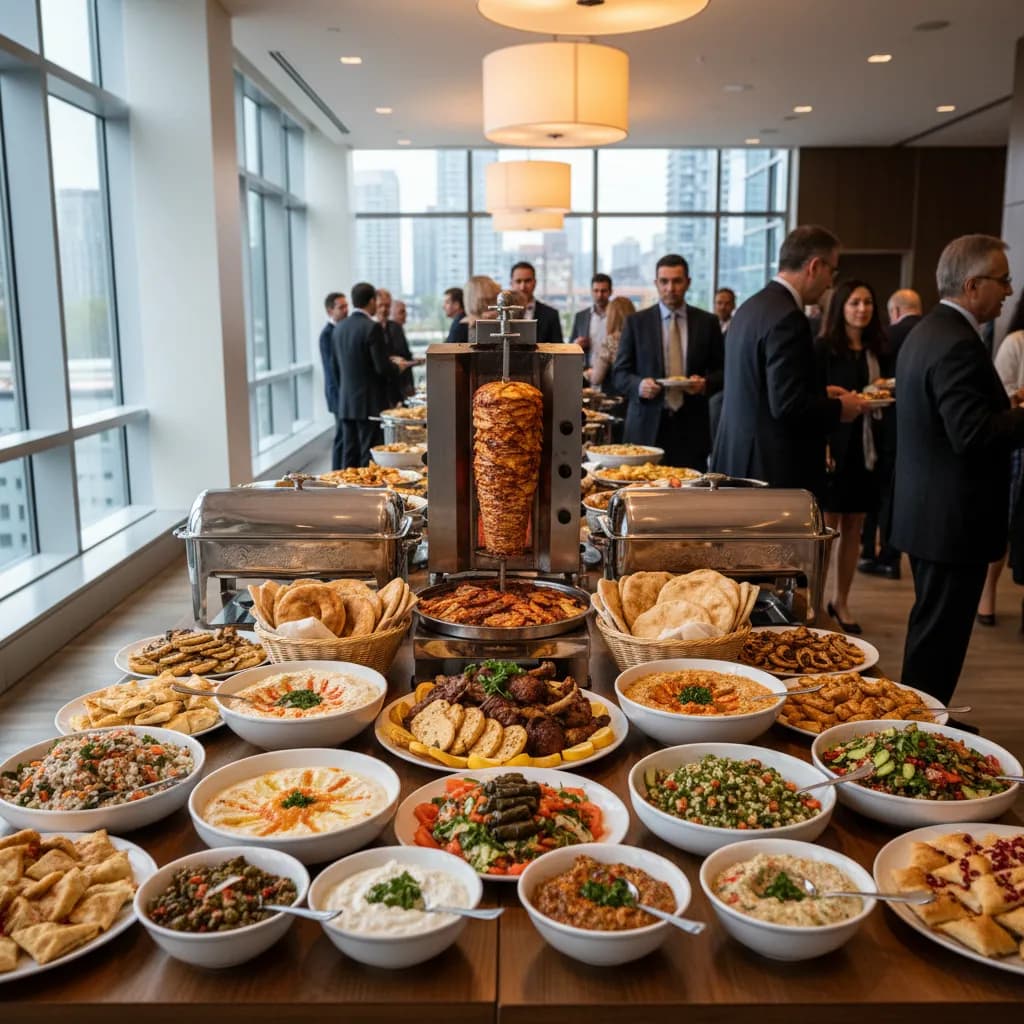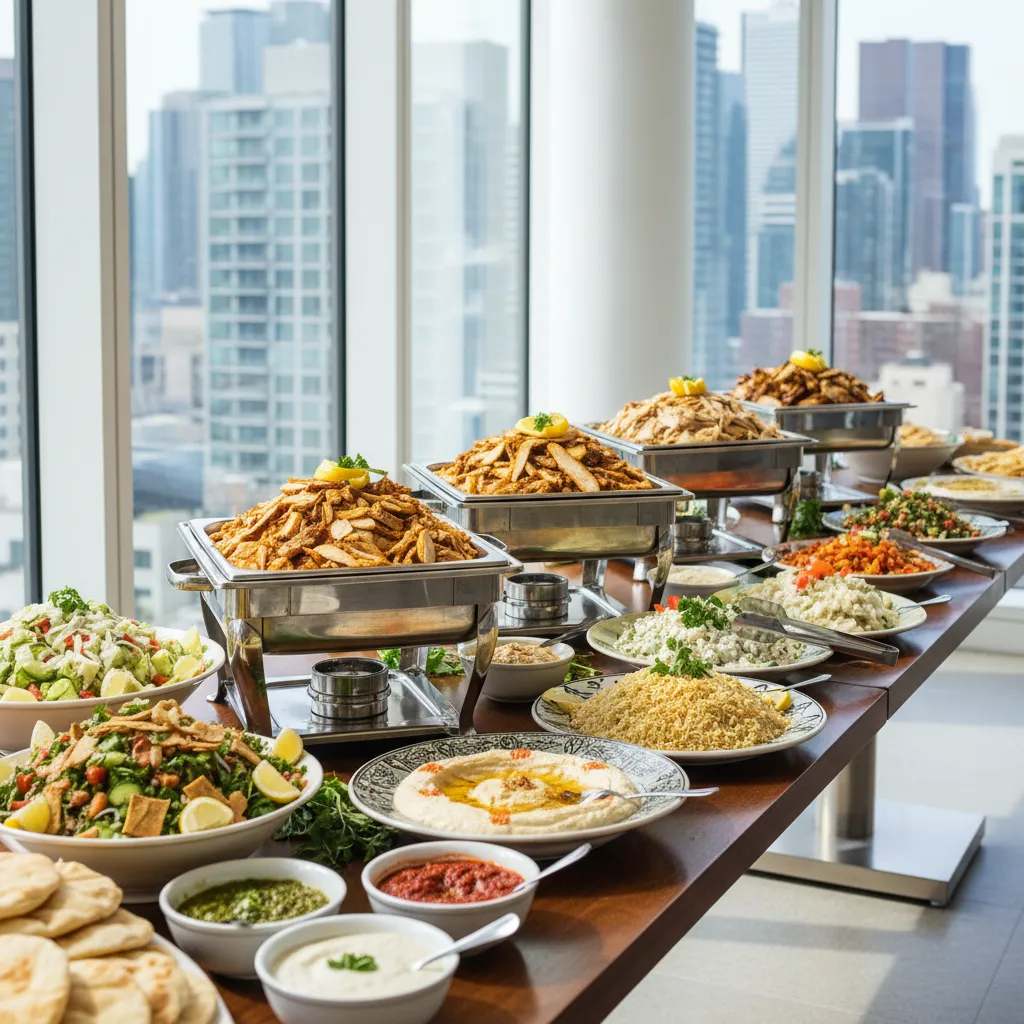
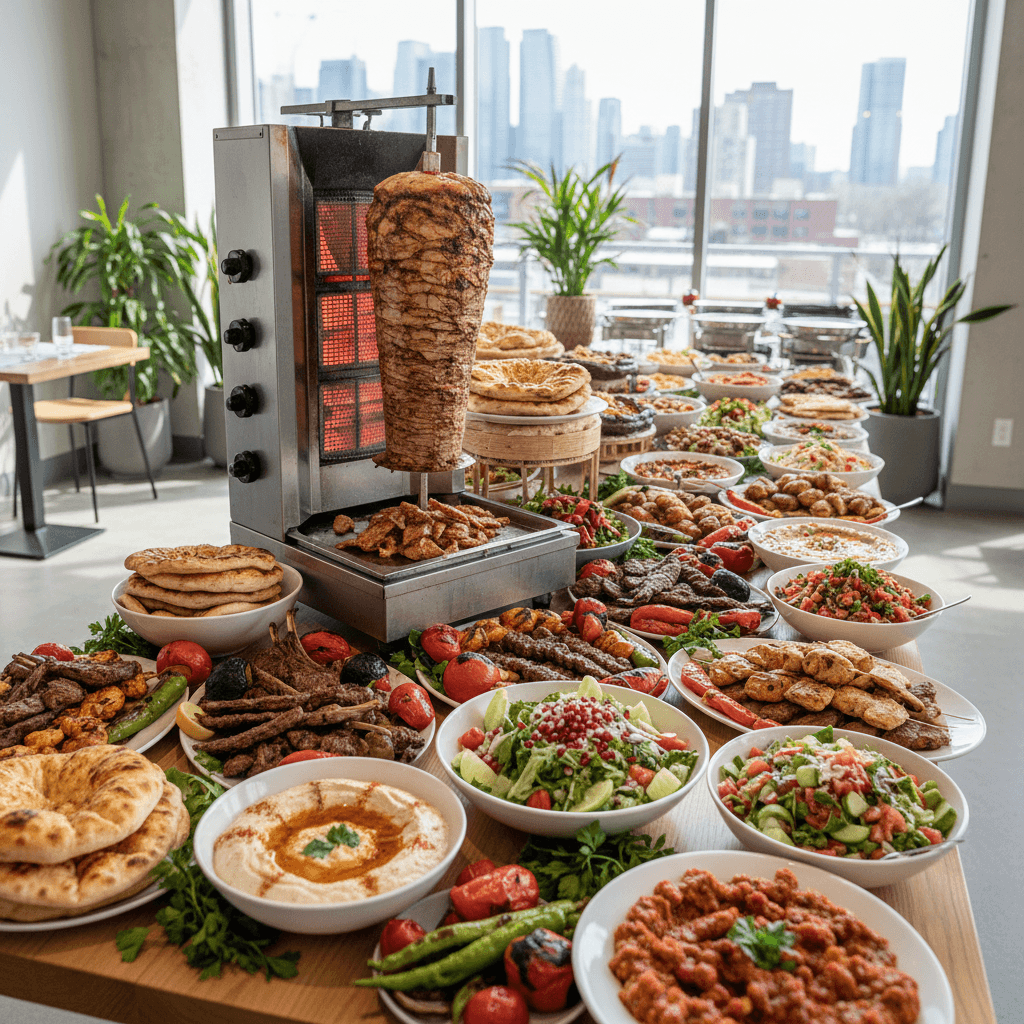
Turkish catering menu ideas are curated combinations of mezze, kebabs, shawarma, salads, breads, and desserts designed for events. They balance crowd-pleasing flavors with dietary needs and logistics. For Old Toronto planners near 898 College St, Shawarma Moose builds authentic Turkish spreads for delivery or pickup that keep guests happy and service smooth.
By Shawarma Moose — Editorial Team
Last updated: 2026-06-13
At a Glance
The best Turkish catering menus pair carved shawarma, grilled kebabs, and colorful mezze with smart service styles (buffet, boxed, or build-your-own). Plan 1.5 savory items per guest per hour, include at least two vegetarian mains, and set up sauces, pickles, and warm breads so guests can personalize plates without slowing the line.
Here’s what you’ll learn and get from this complete guide:
- Clear definitions of a Turkish catering menu and why it wins at Toronto events
- Step-by-step planning, plus 13+ real menu ideas by course and diet
- Service style comparisons (buffet vs. build-your-own vs. boxed)
- Food safety guardrails for off-site service and transport
- Local tips for Old Toronto timing, venues, and transit
- Actionable checklists and a soft CTA to book with Shawarma Moose
Quick Summary
- Menu structure: mezze to start; shawarma and kebabs as mains; pilav, salads, and grilled veg as sides; baklava for dessert.
- Portion heuristics: 6–8 oz protein per person; 3–4 mezze per 10 guests; 1.5 pitas per guest; 1 cup salad per guest.
- Line speed: two serving stations per 50 people; pre-sliced pitas; sauces in squeeze bottles.
- Plan with our event catering menu options and add-ons that fit your crowd.
- For corporate groups, see our corporate lunch catering ideas for break-friendly sets.
What Is a Turkish Catering Menu?
A Turkish catering menu is an event-ready collection of Turkish dishes—mezze, carved shawarma, kebabs, pilav, salads, and sweets—organized for scale, speed, and dietary range. It emphasizes customizable plates, warm breads, fresh salads, and sauces so guests build meals they love while service stays fast and consistent.
In catering, “menu” means more than a list. It’s a sequencing plan that determines guest flow, temperature control, and staffing. Turkish cuisine shines here because components hold well, complement each other, and create variety without complexity.
Core elements you’ll usually see
- Mezze starters: Hummus, baba ghanoush, ezme, stuffed grape leaves, olives, and feta. Plan 3–4 varieties for every 10–12 guests.
- Proteins: Chicken or beef shawarma, Adana kebab, köfte, and grilled chicken skewers. Target 6–8 oz cooked protein per person.
- Sides: Turkish rice pilav, roasted seasonal vegetables, bulgur, and crisp salads (shepherd’s salad, cabbage slaw).
- Carbs and carriers: Warm pitas, Turkish flatbreads (lavash), and sometimes simit for breakfast sets; 1.5 pitas per guest keeps lines moving.
- Sauces and pickles: Garlic sauce, tahini, sumac onions, pickled turnips, spicy ezme, and fresh herbs for brightness.
- Sweets: Baklava, kadayif, or Turkish delight; 1–2 small pieces per guest works for lunches.
At Shawarma Moose, we build this around your space and schedule. For example, our catering in Toronto menu lets planners choose proteins, mezze, and breads by tray, then add desserts and beverages for a complete flow.
Why Turkish Catering Works in Toronto
Turkish catering suits Toronto’s diverse tastes, dietary needs, and fast event timelines. In Old Toronto, layered flavors, warm breads, and fresh salads create satisfying meals that travel well. Build-your-own plating keeps lines quick, while vegetarian and halal-friendly options ensure broad, inclusive appeal for guests and teams.
Events in Toronto need inclusive food that holds up during transport, sets up fast, and satisfies within short breaks. Turkish cuisine checks every box.
- Diverse and inclusive: Meaty mains plus compelling vegetarian options (falafel, eggplant, bulgur) cover mixed diets without separate menus.
- Line-speed friendly: One protein station plus a mezze-and-salad station serves 50 guests in about 12–15 minutes if trays are pre-labeled and breads are pre-sliced.
- Travel-resilient: Pilav, roasted veg, and shawarma hold temperature and texture during short drives across the Toronto core.
- Flavor-first and familiar: Spices like cumin and sumac are exciting yet approachable; sauces let people dial heat up or down.
Health-forward sets also fit modern preferences. For example, Mediterranean-style patterns—lots of vegetables, legumes, olive oil, and grilled proteins—align with guidance highlighted by Harvard’s Nutrition Source, which summarizes evidence linking Mediterranean-style eating to heart and metabolic benefits.
Want to adapt this for your next office meeting? Start with our corporate catering menu ideas and add a mezze bar to maximize variety per table foot.
How to Plan a Turkish Catering Menu (Step-by-Step)
Plan your Turkish catering menu by sizing portions, aligning service style to your venue, and sequencing setup for 10-minute line times. Use a core of shawarma or kebabs, add 3–4 mezze, 2 salads, 1 hot side, and breads, then finish with a sweet. Confirm dietary needs and delivery logistics early.
1) Lock the foundations
- Headcount and timing: Confirm final attendance 48 hours out; pad 5–10% for late RSVPs.
- Dietary survey: Capture vegetarian, vegan, gluten-free, and allergy notes; plan at least two non-meat mains.
- Room flow: Measure buffet space. Two 6-foot tables comfortably serve 40–60 guests in a 20-minute window.
2) Build the plate
- Protein anchor: Choose chicken shawarma, beef shawarma, or köfte. For mixed groups, split 60/40 chicken to beef.
- Mezze variety: Hummus, baba ghanoush, ezme, and grape leaves. Aim for 3 bites per person across mezze.
- Greens and grains: Shepherd’s salad and cabbage slaw add crunch; pilav or bulgur brings balance.
- Breads and sauces: Pre-warm pitas; offer garlic sauce, tahini, and a chili blend. Squeeze bottles speed service by ~20%.
- Sweet finish: Baklava squares; 1–2 pieces per guest works for daytime events.
3) Choose a service style
- Buffet: Fast for 40–150 guests; easy self-service; fewer staff.
- Build-your-own wraps/bowls: Personalization increases satisfaction; best with spaced toppings to avoid bottlenecks.
- Boxed meals: Ideal for 20–50 guests with limited seating/time; zero line and consistent portions.
4) Sequence logistics
- Delivery window: Schedule arrival 20–30 minutes before service for setup and temperature checks.
- Stations: Proteins closest to guests, then breads, then salads, then sauces to keep plates steady.
- Labeling: Print simple menu cards for vegetarian, halal-friendly, and allergens.
- Cleanup path: Staging bins behind the last table keep the front tidy and traffic single-direction.
Need a template? Our private event catering checklist covers headcount math, tray sizing, and a labeling kit you can copy.
Turkish Catering Menu Ideas (By Course, Diet, and Season)
Use a flexible core—shawarma or kebabs, mezze, salads, and pilav—then tailor by diet and season. Offer at least two vegetarian mains, rotate seasonal salads, and pair baklava with citrus or berry sides. This balance keeps variety high while holding times and line speed stay predictable.
Starters and mezze
- Classic quartet: Hummus, baba ghanoush, ezme, stuffed grape leaves.
- Herb-forward tray: Labneh with za’atar, sumac onions, roasted peppers, marinated olives.
- Warm mezze: Falafel bites and sautéed eggplant with tomato; great for cooler months.
Proteins and mains
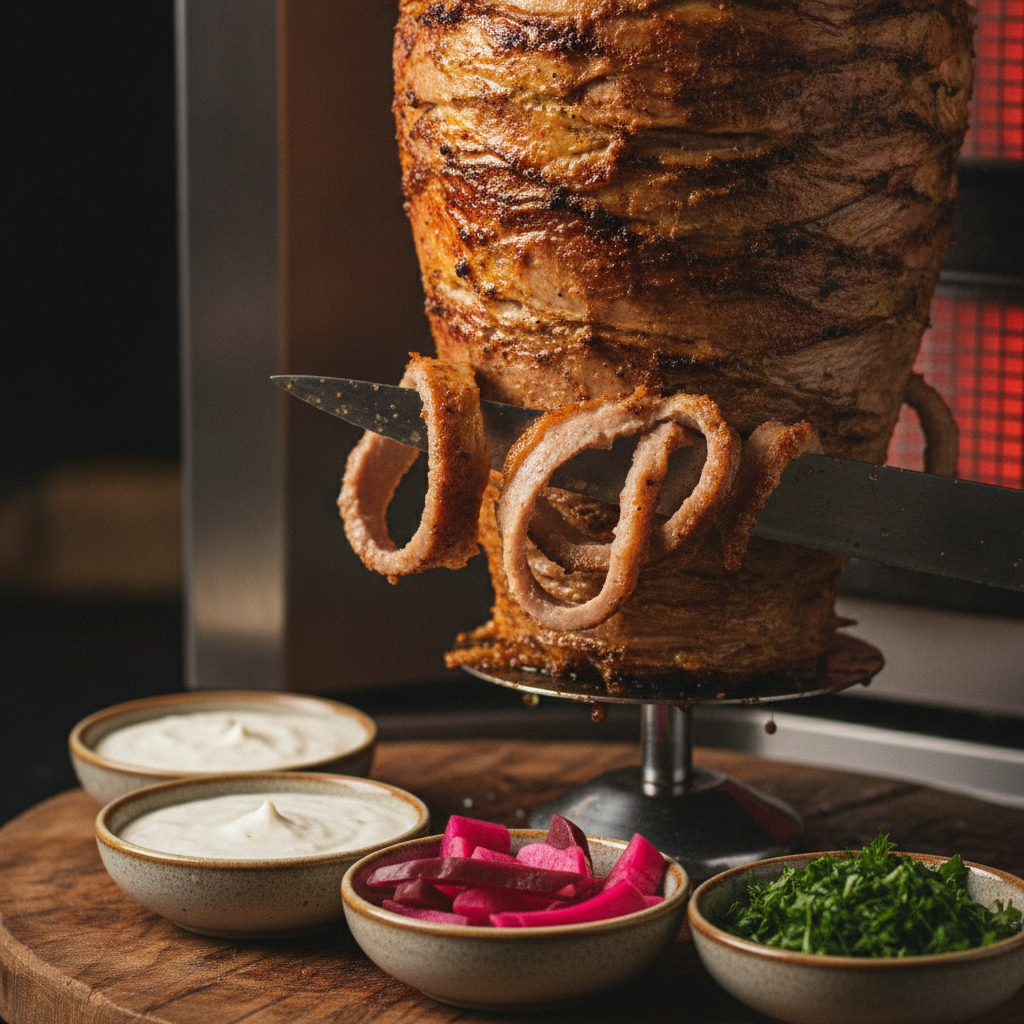
- Shawarma duo: Chicken and beef shawarma, pre-sliced; add pickled turnips and garlic sauce.
- Kebab mix: Adana (spiced ground beef) and chicken skewers; set sumac, parsley, and lemon at the end.
- Vegetarian mains: Falafel with tahini; stuffed peppers with bulgur; sautéed spinach and chickpeas.
Salads and sides
- Greens: Shepherd’s salad, chopped romaine with dill, or red cabbage slaw.
- Grains: Turkish rice pilav, bulgur with tomato, or lemony couscous.
- Vegetables: Roasted carrots with cumin, charred broccoli, or seasonal squash.
Desserts and beverages
- Baklava duo: Walnut and pistachio squares; 1–2 pieces per guest.
- Fruit add-on: Citrus slices in winter; berries and watermelon in summer.
- Drinks: Mint lemonade, ayran (savory yogurt drink), and still/sparkling water.
Ready-to-serve options help tight timelines. For a quick vegan-friendly centerpiece, our falafel plate anchors a plant-forward table alongside salads and grilled vegetables.
Seasonal rotations
- Spring: Add herb-forward salads (dill, parsley), lemony bulgur, and grilled asparagus.
- Summer: Emphasize chilled mezze, cucumbers, and fruit; keep proteins sliced thin for quick plating.
- Fall: Roasted root vegetables with cumin; smoky eggplant; warm bulgur pilav.
- Winter: Heartier mains like köfte and warm mezze; keep breads wrapped to retain heat.
Service Styles and Setup Options
Pick a service style that matches headcount and space: buffet for speed, build-your-own for personalization, or boxed meals for strict timing. Duplicate popular items on both ends of the table, pre-slice breads, and place sauces last to keep plates stable and lines moving.
Here’s a quick comparison you can share with your team.
| Service style | Best for | Pros | Watch-outs |
|---|---|---|---|
| Buffet | 40–150 guests; open rooms | Fast; flexible portions; fewer staff | Popular items bottleneck; duplicate trays at both ends |
| Build-your-own wraps/bowls | 25–120 guests; interactive teams | High satisfaction; easy diet customization | Topper congestion; space toppings in 3–4 clusters |
| Boxed meals | 20–50 guests; short breaks | No lines; predictable portions | Less variety per person; order a few extra vegetarian boxes |
For corporate timelines with rotating attendees, boxed sets paired with a condensed mezze tray deliver both speed and choice. See our corporate lunch catering ideas for sample pairings that travel well.
Need a second opinion? Share your headcount, room layout, and dietary notes. We’ll map the fastest flow and finalize trays the same day. Start with our Toronto catering request.
Best Practices and Food Safety Guardrails
Tools and Resources You Can Use
Leverage simple planning tools: a headcount and diet tracker, tray sizing checklist, table layout sketch, and delivery timeline. Combine these with a flexible online ordering flow and a quick venue walk-through to lock details before event day.
- Menu builder: Use a spreadsheet to combine proteins, mezze, salads, and breads; lock quantities 48 hours before service.
- Tray map: Sketch stations and label utensil positions to reduce cross-contact and line stalls.
- Delivery tracker: Confirm building access, parking/receiving, and load-in constraints; add 15-minute buffers.
- Digital ordering: Submit your request via our Toronto catering page so we capture lead time, headcount, and dietary notes in one flow.
- Playbooks: Browse our event menu ideas to see proven combinations for small offices and larger meetups.
Case Studies and Real Menus (Old Toronto)
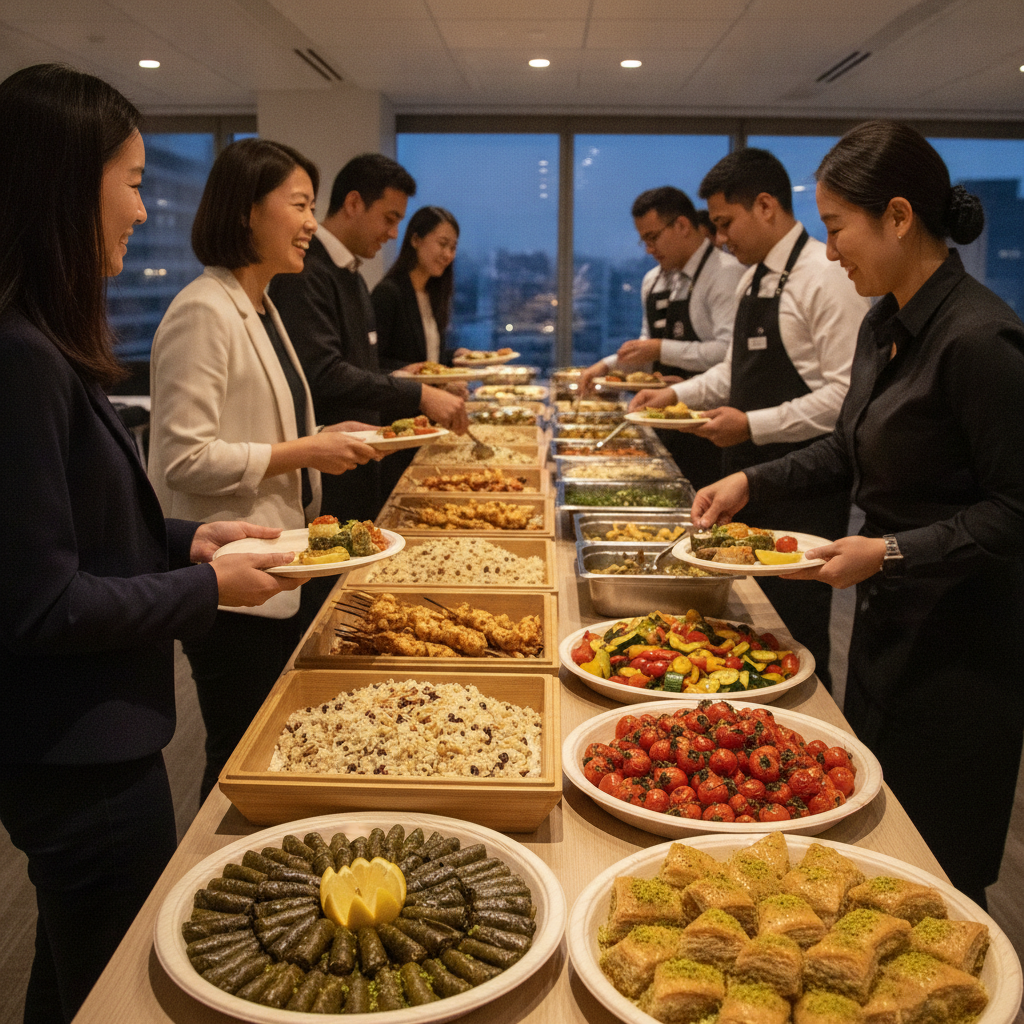
For Old Toronto teams, we’ve supported office lunches, park meetups, and evening mixers. Menus pair shawarma or kebabs with three mezze, two salads, pilav, and breads. Two stations serve 50 guests in under 15 minutes; boxed sets work for tight schedules and mobile crews.
Office lunch, Ossington corridor (45 guests)
- Menu: Chicken shawarma, falafel, hummus, baba ghanoush, shepherd’s salad, cabbage slaw, pilav, pitas, garlic sauce, tahini, pickled turnips.
- Setup: Two 6-foot tables; proteins at center; sauces last. Average line time: ~9 minutes.
- Outcome: Vegetarian guests reported equal satisfaction thanks to falafel and salads.
Park meetup near Dufferin Grove Park (60 guests)
- Menu: Adana kebab, chicken skewers, eggplant mezze, ezme, bulgur, chopped romaine with dill, pitas, lemon wedges.
- Setup: Three clusters to shorten walking paths; duplicate salads; extra napkin caddies.
- Outcome: Staggered arrival windows kept food hot; zero bottlenecks at sauces.
Evening mixer, Old Toronto (80 guests)
- Menu: Beef and chicken shawarma, grape leaves, hummus, roasted peppers, pilav, red cabbage slaw, baklava.
- Setup: Build-your-own wraps; pitas pre-sliced; squeeze bottles for garlic sauce and tahini.
- Outcome: Two lines served 80 in ~14 minutes with consistent portions.
Local considerations for Old Toronto
- Transit and timing: If guests are arriving via Ossington subway, schedule delivery 20–30 minutes before start to account for staggered arrivals.
- Seasonal weather: For summer park events near Dufferin Grove Park, choose more chilled mezze and fruit; keep breads covered to retain warmth without steaming.
- Building access: Older buildings often have tight service elevators; confirm tray sizes and loading access during planning.
FAQ: Turkish Catering and Shawarma
Turkish catering FAQs cover portions, dietary accommodations, menu balance, and logistics. Offer 6–8 oz protein per person, include two vegetarian mains, and set sauces last to keep plates stable. Confirm delivery, access, and labeling in advance for smooth, inclusive service.
How many mezze should I order for 30 guests?
Plan three to four mezze for every 10–12 guests. For 30 people, that’s 9–12 small trays total. Include both creamy (hummus, baba ghanoush) and bright options (ezme, marinated peppers) so textures vary and lines move quickly.
What’s the easiest way to serve wraps without slowing the line?
Use a build-your-own station with proteins first, breads warm and pre-sliced, then salads and sauces at the end. Duplicate shawarma and salad trays at both ends of long tables to cut bottlenecks by half.
How do you handle vegetarian and halal-friendly needs together?
Offer at least two vegetarian mains (for example, falafel and stuffed peppers), label utensils, and keep vegetarian trays separate from meats. Provide garlic sauce and tahini as self-serve so guests can customize flavors.
What temperatures should cooked items reach and hold?
Poultry should reach 165°F; ground meats 160°F; keep hot foods at 140°F or above and cold foods at 40°F or below. For quick reference, see the U.S. guidance summarized on FoodSafety.gov.
Related Topics and Next Steps
Finalize your Turkish catering plan by pairing one shawarma or kebab anchor with three mezze, two salads, a hot side, and breads. Choose buffet for speed or boxed for strict timing. Lock headcount 48 hours out and confirm building access, labeling, and temperature checks.
- Explore sample combinations in our event menu ideas guide.
- See veggie-forward pairings that please mixed groups in our event food planning tips.
- Ready to go? Submit the details through our Toronto catering page and we’ll confirm the plan.
Conclusion and Key Takeaways
Turkish catering succeeds when you combine a flexible core (shawarma or kebabs, mezze, salads, pilav) with a service style that matches your room and schedule. Keep line speed high, label clearly, and plan for two vegetarian mains. Confirm logistics early to deliver hot, fresh, and inclusive meals.
- Anchor on shawarma or kebabs; add three mezze, two salads, pilav, and breads.
- Pick service style by space/time: buffet for speed; boxed for strict schedules.
- Plan 6–8 oz protein per person; 1.5 pitas each; sauces last in the line.
- Hit safety marks: 165°F poultry; hot 140°F+; cold 40°F−; labeled utensils.
- Localize for Old Toronto transit, access, and season.
If you want a fast, done-for-you plan, we’re here to help. Share headcount, diet notes, and your room layout, and we’ll tailor a Turkish menu that fits your flow—then deliver it to your door in the Toronto core.