A shawarma catering cost guide is a framework to plan portions, service style, and logistics so you can feed guests well without overspending. At Shawarma Moose in Toronto (898 College St), we use it to right-size orders, minimize waste, and keep events smooth from setup to cleanup—without discussing specific prices.
By Shawarma Moose • Last updated: 2026-06-16
Above-Fold: Your Shawarma Catering Cost Guide
Use a shawarma catering cost guide to match portions, format, and timing to your guest count. Decide on buffet, boxed, or build-your-own service, confirm delivery windows, and plan sides and sauces. This approach feeds more people confidently, reduces waste, and keeps dietary needs covered—without discussing dollar amounts.
Here’s the promise: clear steps, checklists, and examples based on how we actually cater corporate lunches and private events across Toronto. You’ll see how to plan portions, choose formats, and coordinate delivery from our Old Toronto kitchen—so you feed everyone, on time, with zero guesswork.
What Is a “Shawarma Catering Cost Guide”?
A shawarma catering cost guide is a decision playbook that aligns portioning, service style, and logistics with guest needs. It shows what drives spend—headcount, menu breadth, packaging, delivery windows—and how to control it with smart choices, all without listing explicit prices.
Think of it as your event’s flight plan. You’ll map headcount, portions per guest, protein mix, sides, packaging, and delivery timing. Then you’ll confirm dietary accommodations and space setup. This gives you predictable outcomes and lets you maximize value while staying within guardrails.
What this guide covers
- Portion planning: Proven per-person baselines for wraps, bowls, proteins, and sides.
- Service formats: Buffet, build-your-own, boxed meals, and platters—pros and tradeoffs.
- Logistics: Delivery/pickup from 898 College St, venue access, and hot-hold practices.
- Dietary needs: Halal, vegetarian, vegan, and gluten-sensitive workflows.
- Value levers: Menu focus, packaging strategy, and timing buffers that reduce waste.
We’ll reference real workflows from our catering service, corporate catering, and individual catering pages so you can follow the same steps we use daily.
Why This Matters in Old Toronto
In Old Toronto, travel time, elevator access, and meeting schedules often compress setup windows. A cost guide keeps your event on track: lock in service style, headcounts, and dietary needs early, then schedule delivery buffers to protect start times and food quality.
Neighborhood venues and offices vary in access and timing. Clear, early decisions reduce stress and protect quality. For example, choosing build-your-own bowls can move guests faster in narrow spaces; boxed meals minimize traffic at shared tables; platters shine when you’ve got room to set a buffet line.
Local considerations for Old Toronto
- Allow extra time near Ossington during rush hours; loading zones can be busy, so confirm a contact to receive trays quickly.
- Outdoor lunches by Dufferin Grove Park? Plan lids and insulated carriers to protect temperature in cooler months.
- Many offices have small service elevators. Favor platter stacks or boxed sets to reduce trips and keep meetings on schedule.
We operate out of 898 College St in Old Toronto, so we know these nuances well and plan routes and buffers accordingly.
How a Shawarma Catering Cost Guide Works (Step-by-Step)
Start with headcount and timing, then select a format (buffet, boxed, build-your-own). Choose proteins and sides, plan per-person portions, confirm dietary needs, and finalize delivery or pickup. This structured flow reduces waste and ensures every guest gets a satisfying meal.
1) Confirm headcount and schedule
- Headcount locks everything else: Portioning, packaging, and delivery timing cascade from this number.
- Book the time window: A 15–30 minute buffer before the meeting protects start times if elevators or loading areas are tied up.
- Segment the list: Note vegetarians, vegans, gluten-sensitive, and halal requirements upfront to avoid last-minute scrambles.
In our experience with Toronto offices, a 10–15% swing in same-day attendance is common. Planning flexible portions (for example, a few extra bowls or half-wraps) absorbs surprises without creating waste.
2) Choose the service format
- Build-your-own bowls: Fast line flow, easy customization, efficient for mixed dietary needs.
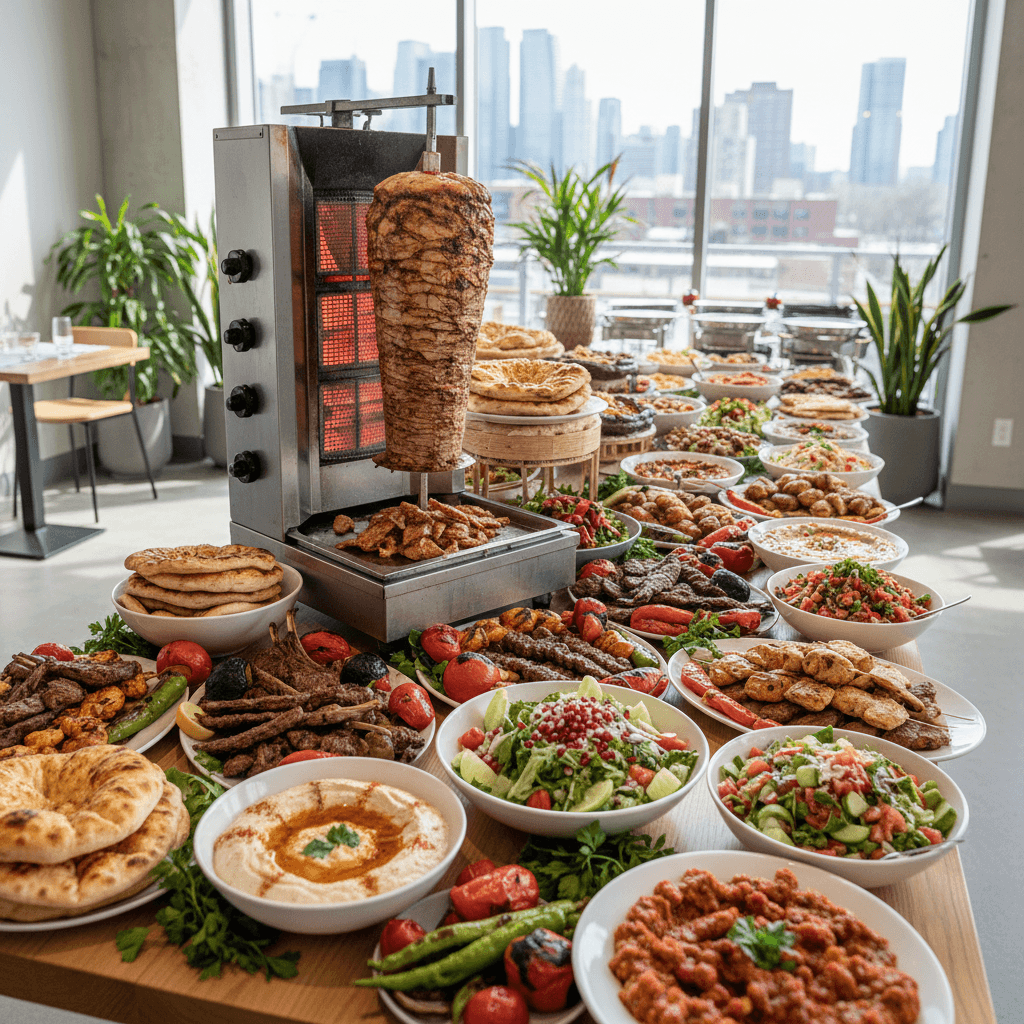
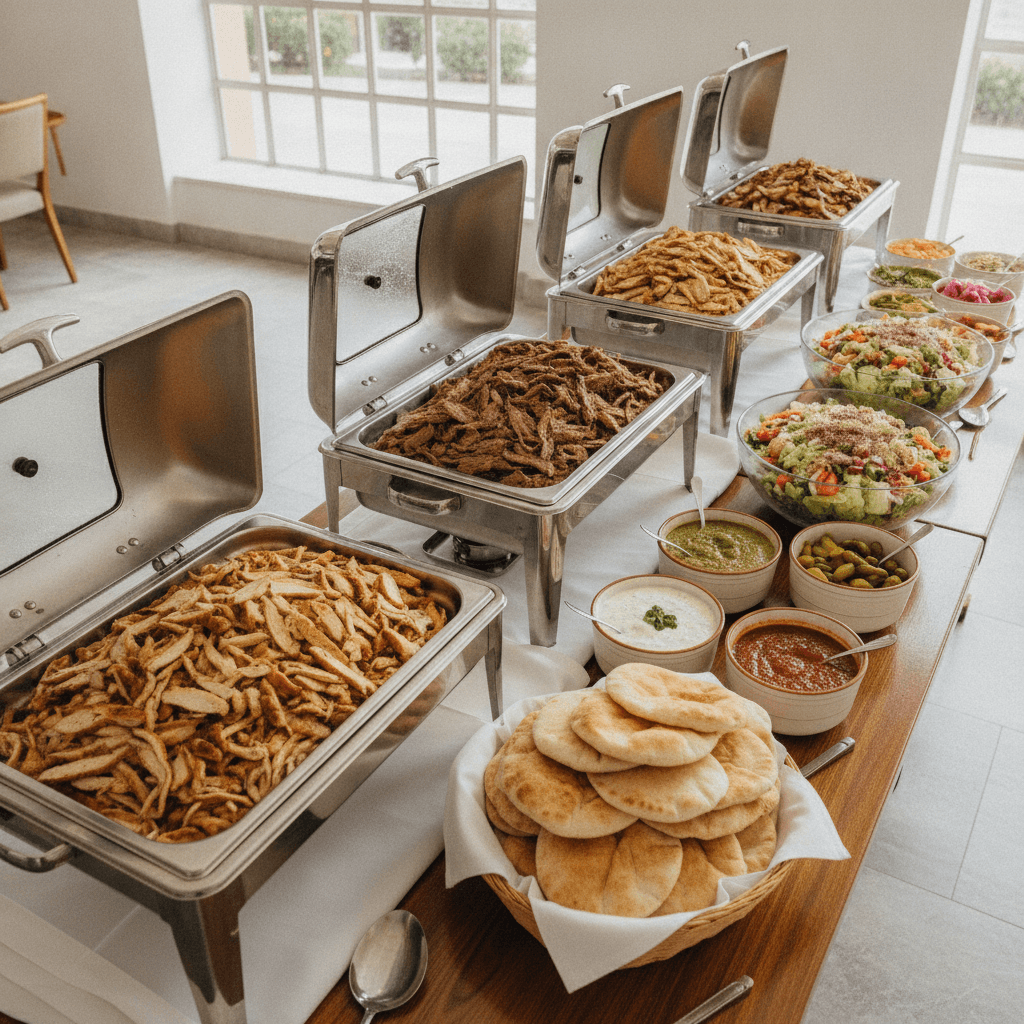
- Buffet platters: Great visual impact; ideal when you can stage a full table with chafers and risers.
- Boxed meals: Easiest distribution; keeps meetings tight on time and reduces cleanup.
- Wrap trays: Familiar crowd-pleaser; simple to eat while standing or mingling.
We help you match format to space and schedule. Short on time? Boxed. Plenty of room? Buffet or bowls. Need speed and clarity for dietary needs? Build-your-own with labeled components.
3) Pick proteins, sides, and sauces
- Proteins: Chicken shawarma, beef shawarma, or a mix. Add falafel for vegetarian and vegan guests.
- Sides: Rice, salad, roasted potatoes, grilled vegetables; choose two to balance flavors.
- Sauces: Garlic, tahini, hot sauce; include labels and separate cups for boxed or platter formats.
Menu focus keeps lines moving and portions consistent. Two proteins plus two sides is a proven baseline for crowd satisfaction and speed.
4) Plan per-person portions
- Bowls: One bowl per person, with a small reserve of 5–10% extra bases (rice/salad) for top-ups.
- Wraps: A wrap per guest, with an additional 10–15% half-wraps for hungry teams or late joiners.
- Buffet: Proteins at roughly palm size per person, with extra starch and salad to balance appetites.
Right-sizing reduces leftovers and protects variety. We calibrate portions based on your headcount, meeting length, and whether the food is the main meal or a supplemental snack.
5) Lock delivery or pickup logistics
- Delivery: Share floor, suite, entrance, and elevator details; confirm a cell contact for handoff.
- Pickup: Choose a pickup time from our online ordering that aligns with your agenda; we’ll stage everything for quick loading.
- Setup: Tell us if you have tables, power, or onsite chafers; we’ll adapt packaging for your layout.
Small details prevent big delays. A five-minute elevator wait or a locked delivery door can snowball—buffers and contact names keep everything on schedule.
Types/Methods: Service Styles and When to Use Them
Match service style to space and schedule. Boxed meals win for speed and distribution control. Build-your-own bowls excel for customization. Buffets deliver impact when you have room and time. Wrap trays are perfect for stand-up mingling or casual sessions.
Each style serves a different operational goal. The table below maps strengths, considerations, and best-fit scenarios so you can choose with confidence.
| Service style | Strengths | Considerations | Best for |
|---|---|---|---|
| Boxed meals | Fast distribution; tidy; easy headcount control | Less visual impact than full buffet | Tight agendas, training rooms, offsite workshops |
| Build-your-own bowls | Customizable; handles dietary needs gracefully | Needs a staging table; line management required | Mixed preferences, diverse teams, all-hands lunches |
| Buffet platters | High “wow” factor; flexible portioning | Requires space and a few minutes for setup | Client luncheons, celebrations, spacious boardrooms |
| Wrap trays | Grab-and-go; great for standing receptions | Labeling important for variety and allergens | Open houses, mixers, casual meetups |
Pair proteins and sides for balance
- Chicken + rice + salad: Universal crowd-pleaser and line mover.
- Beef + potatoes + grilled veg: Heartier combination for longer sessions.
- Falafel + rice + salad: Vegetarian/vegan anchor with strong flavor and texture.
In our Toronto catering, keeping to two proteins and two sides speeds the line by up to a few minutes per twenty people—small gains that add up when you’re feeding a full team.
Best Practices: Value Levers That Stretch Your Budget
You’ll feed more guests without waste when you simplify menus, right-size packaging, and stagger delivery times. Focus on two proteins, two sides, clear labeling, and a service style that fits your room and agenda. These moves raise satisfaction and limit leftovers.
Menu focus beats menu bloat
- Limit to two proteins and two sides; add a third only for very large, mixed-preference groups.
- Use sauces to add variety without slowing the line; keep garlic, tahini, and hot sauce accessible.
- Offer a single dessert style (e.g., baklava) rather than multiple sweets that fragment portions.
We see stronger guest satisfaction when choices are clear but not overwhelming. It also simplifies labeling and speeds service.
Packaging choices that work harder
- For bowls, use sturdy bases and separate sauce cups to protect textures.
- For platters, tight lids and stackable trays make elevator trips faster.
- For boxed meals, include napkins and forks inside to reduce table clutter.
Right packaging smooths setup and cleanup. It’s the difference between a calm service and a cluttered table.
Timing and buffers
- Schedule delivery 15–30 minutes before the eating window to cover elevator delays and room transitions.
- Stagger multiple lines for groups over 40 to halve queue times.
- Keep labels at eye level for quick identification and allergy confidence.
Even a five-minute gain per line can keep a town hall on schedule. We build buffers into every Old Toronto run because traffic and access vary by block.
Tools/Resources: Food Safety and Quality Signals
Protect temperature, label allergens clearly, and keep hot foods covered until service. Use insulated carriers, portion tongs, and separate sauce cups. These tools keep shawarma, sides, and salads tasting the way they should, even with elevator rides and room changes.
Our crews bring insulated carriers and stage hot and cold items separately. We label trays and sauces so guests can make quick, confident choices. For meetings that run long, we plan refills of bases like rice and salad so the last plate is as good as the first.
Explore our event catering menu options and corporate ideas to visualize how these tools come together in real setups.
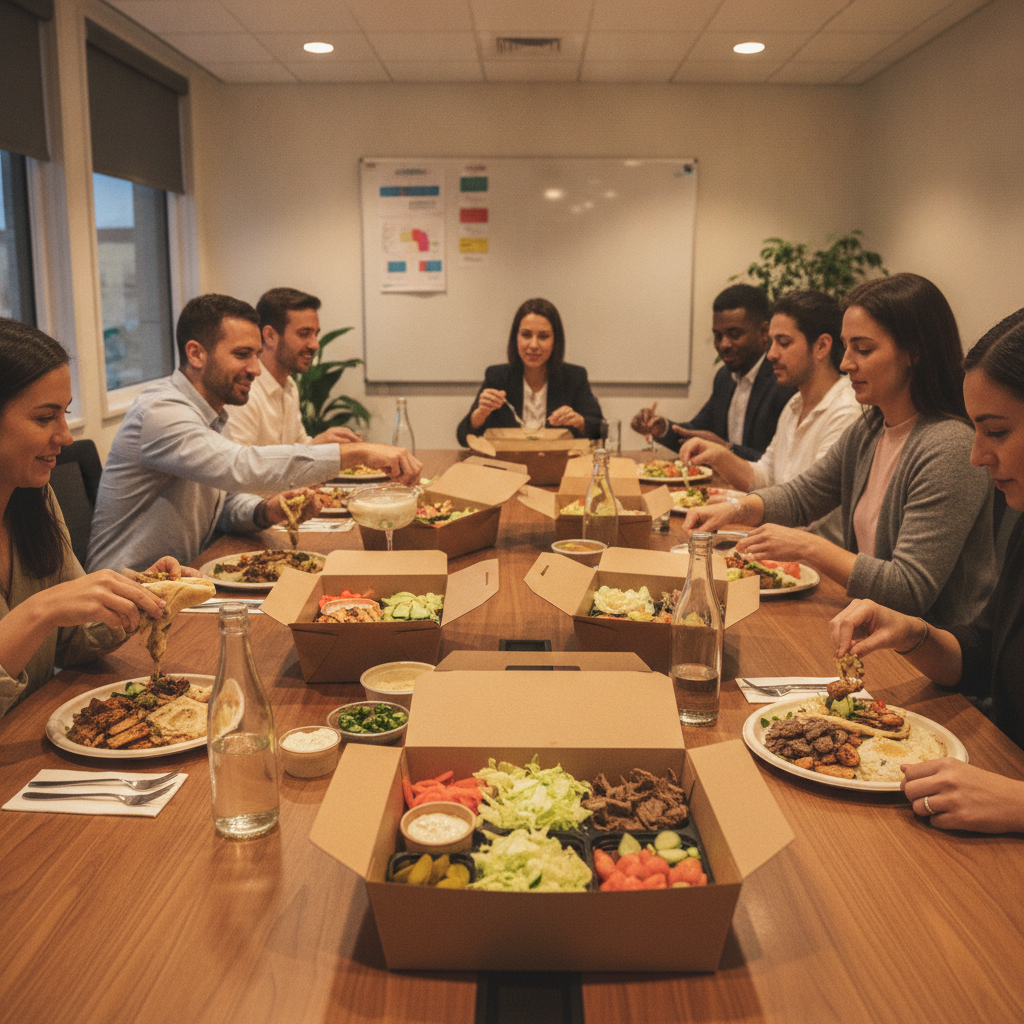
Need a quick plan? Share your headcount and schedule, and we’ll map portions, packaging, and delivery buffers for you. Start with our catering page or see corporate catering options.
How Portion Planning Works—Without Waste
Anchor portions to the main format: one bowl or wrap per person, then keep a 5–15% reserve of bases or half-wraps for spikes in appetite or late arrivals. Balance proteins with plentiful salad and rice to keep plates satisfying and consistent.
Teams eat differently across meeting types. For working lunches, guests often build larger plates. For all-hands, people graze. We design portions to flex, using extra bases to avoid running out of favorites while keeping total food aligned to your confirmed headcount.
Baselines you can trust
- Bowls: One per person, plus a modest reserve of rice and salad.
- Wraps: One per person, plus 10–15% half-wraps for hungry teams.
- Buffet: Palm-size protein portions with abundant sides; replenish bases first.
This approach feeds more guests confidently and limits leftovers. It also shortens lines because choices are clear and consistent.
How Logistics Work From 898 College St
We stage orders in Old Toronto, build trays or boxes to spec, then deliver with insulated carriers. Clear access details and a 15–30 minute buffer protect start times. For pickups, we stage everything for fast loading and provide handling notes for a smooth setup.
Every venue is different, so we tailor packaging and handoff. Boxed sets move fast through lobbies and elevators. Buffets ride in stackable trays with tight lids. Build-your-own lines need a bit more table space but speed up once guests start serving.
Ready to coordinate logistics? Visit our Toronto catering overview to see common formats and planning steps.
Catering Types and Real Use Cases
Corporate lunches favor boxed sets and bowls for speed and clarity. Private parties lean toward platters and wrap trays for grazing. Mixed-diet groups benefit from build-your-own lines with labeled sauces and toppings. Choose based on room flow, agenda, and guest mix.
Corporate lunch in a boardroom
- Format: Boxed bowls with chicken, falafel, salad, and rice.
- Why: Fast distribution; easy cleanup; clear dietary labeling.
- Logistics: Delivery 20 minutes before; direct handoff to an onsite contact.
This setup keeps a 60-minute meeting on track, even with elevator delays. It also gives vegetarian and vegan guests clear options without slowing the room.
Open house or networking mixer
- Format: Wrap trays plus small plates of salad and potatoes.
- Why: Guests can eat standing and mingle.
- Logistics: Staged near entrances; quick restocking from back-of-house trays.
Wrap variety keeps people curious and engaged. Labeled halves help guests discover favorites without committing to a full wrap right away.
Family-style celebration at home
- Format: Buffet platters with two proteins, two sides, sauces, and pita.
- Why: Flexible portioning for mixed ages and appetites.
- Logistics: Pickup at 898 College St; handling notes provided for reheat and setup.
Platters create a centerpiece and keep refills smooth. We prep packaging to fit home counters or dining tables without crowding.
Dietary and Allergen Workflows (Halal, Vegetarian, Vegan, Gluten-Sensitive)
Separate prep lines, labeled components, and distinct utensils keep meals safe and clear. Halal proteins, vegan anchors like falafel, and gluten-sensitive options are staged with visible labels and individual sauce cups when needed to avoid cross-contact.
We treat labeling as a service speed tool, not just a safety measure. Clear tags prevent guests from pausing the line to ask questions. We also stage vegetarian and vegan items at the front of lines so guests see them first and feel confident building their plates.
Simple labeling plan
- Place protein labels at the front edge of trays.
- Use distinct scoops/tongs for each item; never mix with allergen items.
- Keep sauces in separate, sealed cups for bowls and boxes.
If you prefer zero-contact options, boxed bowls ensure every component is sealed and separated until guests open their meals.
FAQ: Shawarma Catering Planning
Plan portions around one main item per person with small reserves; choose a service style that fits your space and schedule; and label components clearly. Confirm access details and a 15–30 minute buffer to keep service on time in Old Toronto.
How do I choose between boxed meals and a buffet?
If you’re short on time or have tight seating, boxed meals are fastest and easiest to distribute. If you have room to stage a table and want visual impact with flexible portions, go buffet. Build-your-own bowls split the difference by offering speed and customization.
What portion baseline should I use for a mixed group?
Plan one bowl or wrap per person, then keep a 5–15% reserve in bases like rice or salad for top-ups. For buffets, think palm-size protein portions and generous sides. This balances appetite differences and limits leftovers without underfeeding guests.
Can you accommodate halal, vegetarian, vegan, and gluten-sensitive needs?
Yes. We stage halal proteins separately, use distinct utensils, and provide clear labels. Vegetarian and vegan options like falafel are easy to feature in bowls or buffets, and we can package gluten-sensitive items with separate sauces to avoid cross-contact.
Is delivery or pickup better for downtown offices?
Delivery is best when elevator access and timing are tight—share floor and contact details for a smooth handoff. Pickup works well if you’re nearby and can control timing. We stage both options at 898 College St so setup is quick either way.
At a Glance: Quick Summary
Choose one main format, keep menus focused, label clearly, and build timing buffers. These moves feed more people confidently, protect food quality, and simplify cleanup—ideal for Old Toronto offices and private events.
- Lock headcount and schedule; add a small timing buffer.
- Pick boxed, build-your-own, buffet, or wrap trays based on space.
- Plan one main item per person; keep a small reserve of bases.
- Label proteins, sides, and sauces for speed and safety.
- Coordinate delivery or pickup details early.
Case Studies: Real Toronto Examples
Toronto teams get the best results when format matches space and agenda. Boxed bowls keep boardrooms on time. Wrap trays speed casual mixers. Platters shine at home gatherings. These real setups show how small choices translate into smooth service.
Tech startup all-hands (Old Toronto)
- Context: 55-person monthly meeting; narrow hallway access.
- Plan: Build-your-own bowls, chicken + falafel, rice + salad, sauces labeled.
- Outcome: Two lines served everyone in under 15 minutes; clear labeling cut questions.
Line speed and visual clarity mattered more than a big table display. The team kept its agenda intact while everyone ate well.
Agency client lunch (King West to Old Toronto route)
- Context: 18-person client review; firm start time.
- Plan: Boxed bowls delivered 20 minutes early with labeled vegetarian and gluten-sensitive sets.
- Outcome: Quick distribution; zero delays; easy cleanup before the next block.
Boxed sets meant no one hunted for utensils or labels. The meeting started exactly on time.
Family celebration pickup (near Dufferin Grove Park)
- Context: Home buffet for 30; limited counter space.
- Plan: Two proteins, two sides, sauces, and pita in stackable trays.
- Outcome: Easy setup with clear handling notes; guests served in natural waves.
Stackable packaging and focused menu created a smooth, happy flow without crowding the kitchen.
How to Order from Shawarma Moose
Share your headcount, timing, and format. We’ll confirm portions, packaging, and delivery or pickup from 898 College St. Use our catering or corporate pages to start, or contact us for help mapping the plan to your room and agenda.
Begin with our catering page, review corporate catering, or explore individual catering if you’re feeding a smaller group. Need ideas? These menu options are a solid starting point.
Key Takeaways
Lock headcount and timing, choose a format that fits your space, and keep menus focused. Label clearly and build buffers into delivery or pickup. This is how Toronto teams feed more guests confidently without overspending.
- Headcount first, then format and portions.
- Two proteins + two sides is a high-satisfaction baseline.
- Boxed for speed; bowls for customization; platters for impact.
- Reserve 5–15% extra bases to absorb surprises.
- Plan access details; schedule a small time buffer.
Conclusion
A shawarma catering cost guide aligns decisions—portions, format, logistics—so you serve great food on time with minimal waste. Use it to match your room and agenda, protect quality, and keep guests happy without getting into price specifics.
Ready to map your event? Start with our catering resources, skim corporate menu ideas, and review our Toronto catering overview. Tell us the headcount, service style, and schedule—our Old Toronto team will handle the rest.