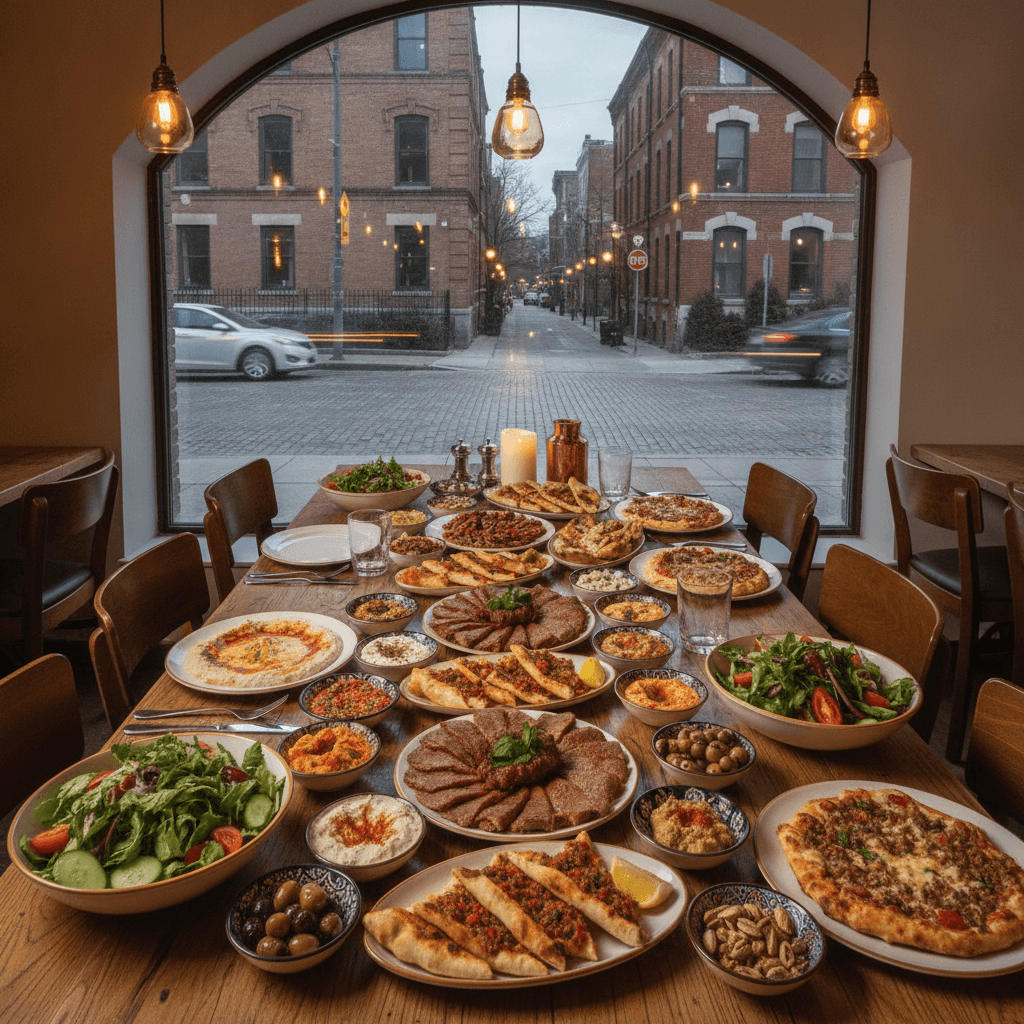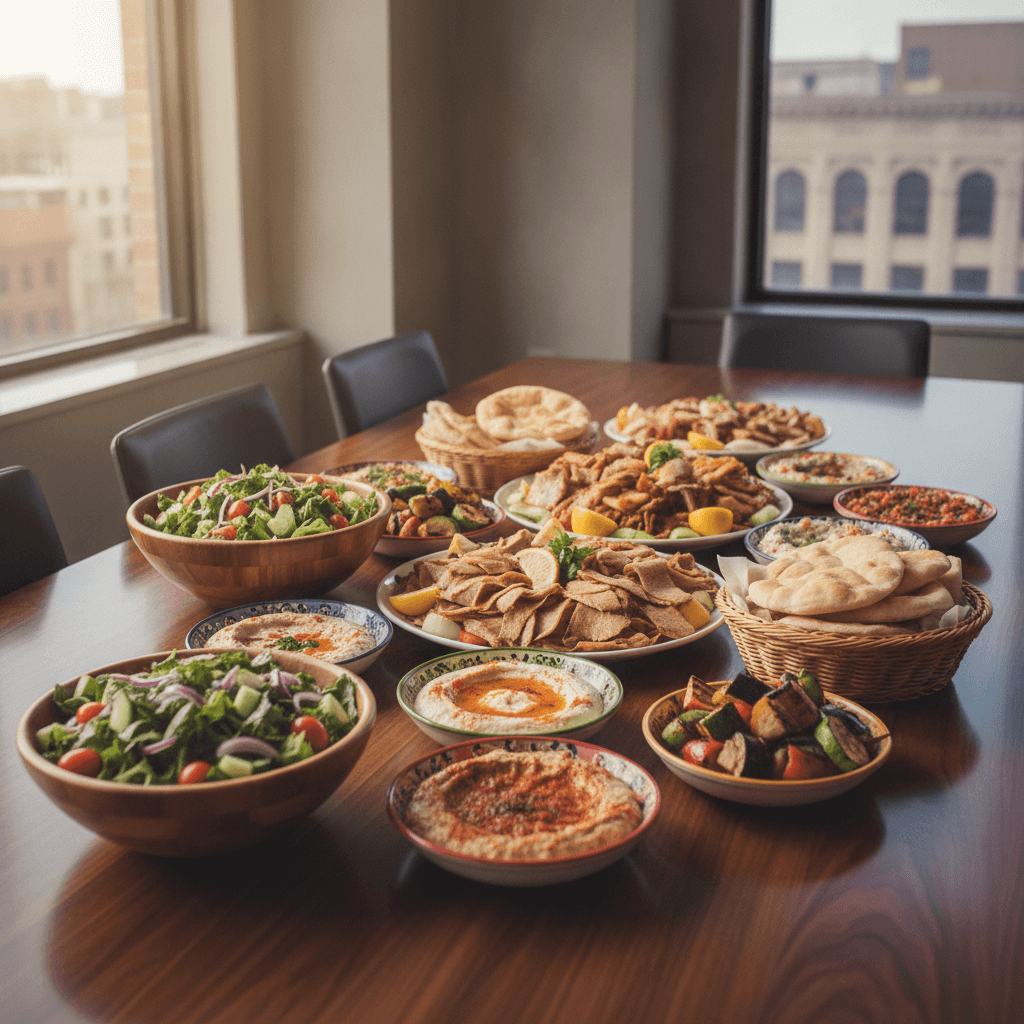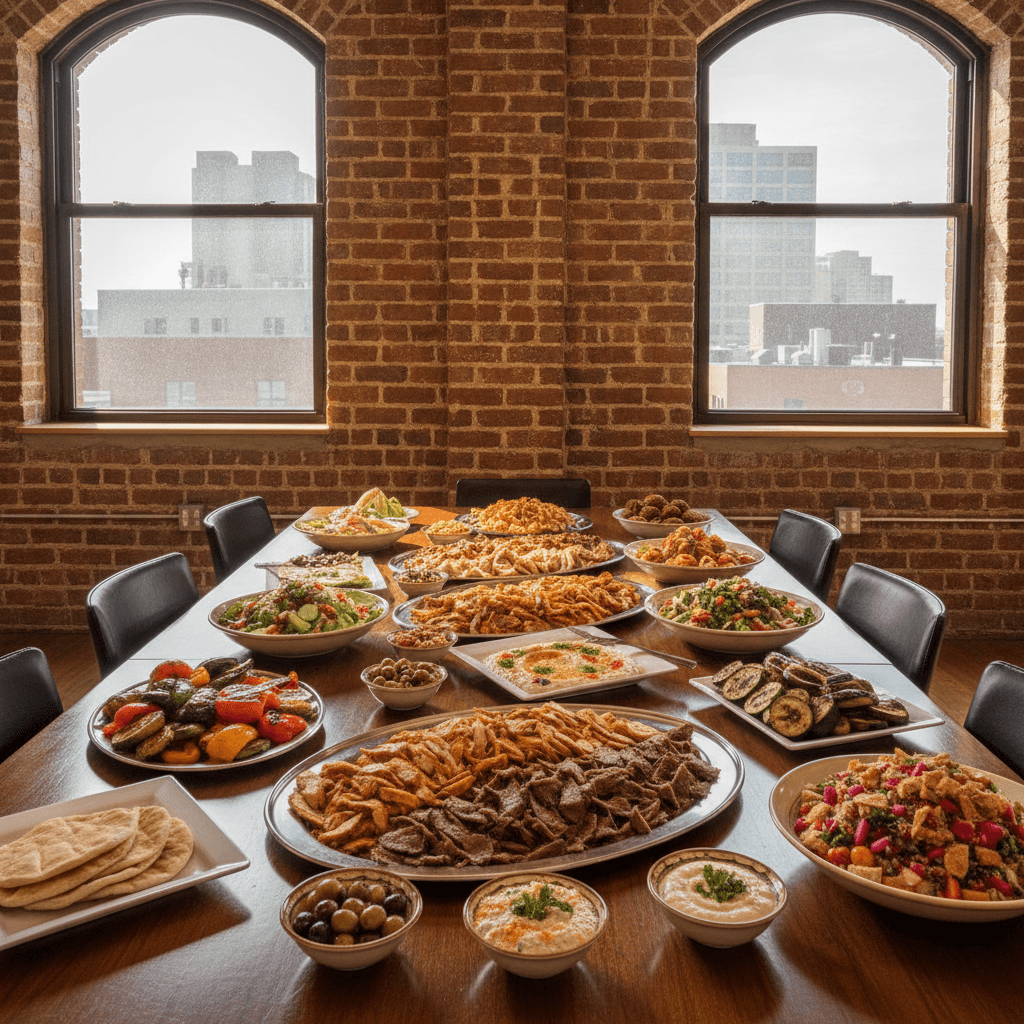
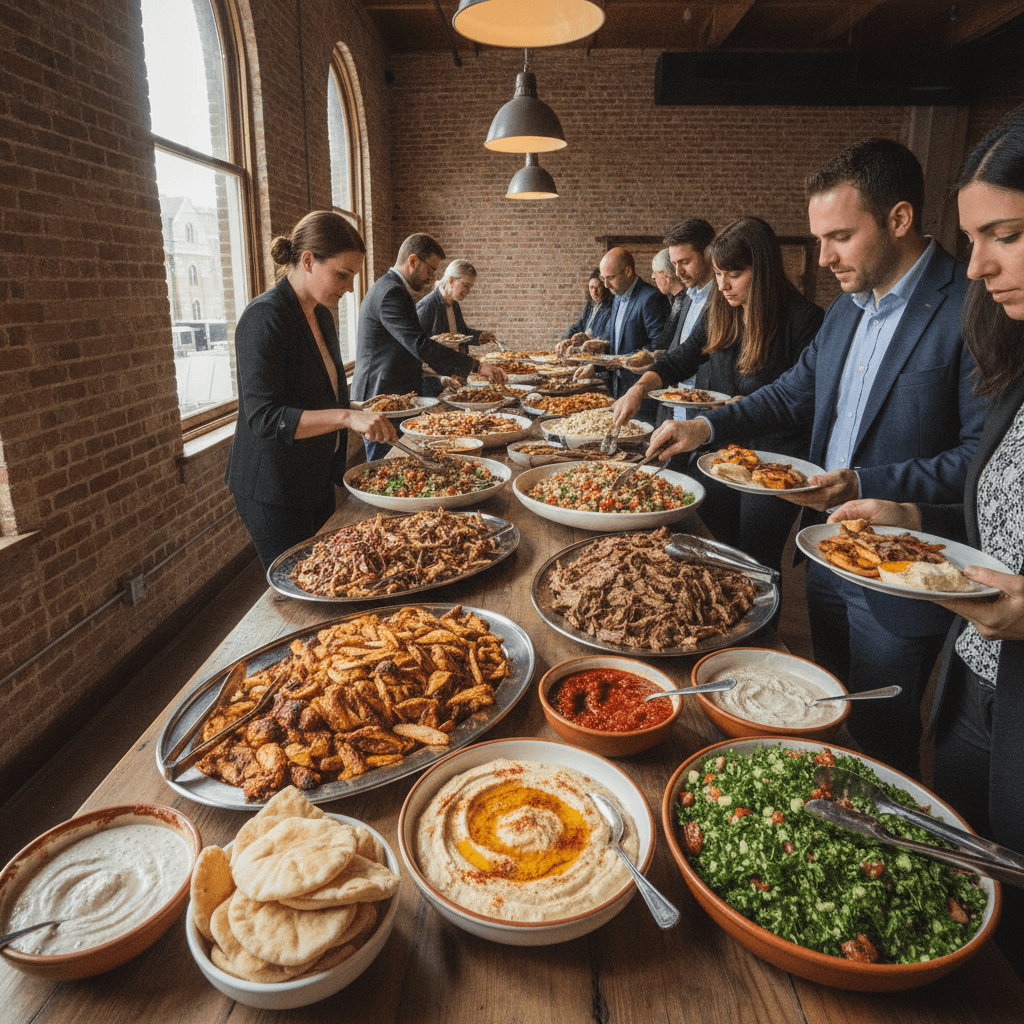
Shawarma catering cost is the total you invest to feed your group, driven by guest count, menu variety, service style, delivery logistics, and equipment. In Old Toronto, how much shawarma catering costs also reflects venue access and timing. Choose transparent providers who itemize what’s included so you understand value—without surprise add-ons.
By Shawarma Moose • Last updated: 2026-06-28
Quick summary: what drives shawarma catering costs
The biggest drivers are headcount, menu mix, service style, distance, and setup time. Clarify inclusions (serving ware, sterno, delivery window) and lead time. Lock final counts early, confirm dietary needs, and get everything in writing. This reduces add-ons and ensures your total reflects real needs—not guesswork.
Here’s the overview we share with corporate planners and party hosts alike. Most events hinge on five levers: attendance, menu depth, service approach, logistics, and dietary coverage. Make a few smart decisions two weeks out, and you’ll protect the guest experience while keeping your total predictable. For context and options, see our catering overview which explains service styles and inclusions in plain language.
- Headcount accuracy: Plan for realistic attendance and a small buffer of 5–10% to handle walk-ins.
- Menu depth: Each added protein, salad, or dessert layer adds prep time, labeling, and packing.
- Service style: Drop-off, buffet setup, on-site carving, and boxed meals have distinct logistics footprints.
- Logistics: Elevators, loading zones, and distance can add 15–30 minutes per delivery leg.
- Dietary coverage: Vegetarian, vegan, gluten-friendly, and nut-aware labeling reduces questions and speeds lines.
When planners align these levers early, events stay on schedule. We’ve found that a clear run-of-show—delivery arrival, 20–30 minutes for setup, 45–90 minutes of service—keeps teams calm and food hot. That sequencing alone prevents last-minute labor changes and protects quality.
What is “shawarma catering cost”?
Shawarma catering cost refers to the full scope of resources required to serve your event: food, labor, logistics, rentals, and time. It’s not only the food—service style, delivery access, and equipment matter. Clarity on inclusions prevents hidden fees and aligns expectations with your event goals.
In practical terms, “cost” is the sum of decisions you make before the first platter leaves the kitchen. Food volume is central, but packaging, heat retention, labeling, and delivery windows shape outcomes. For longer agendas (90+ minutes), insulated trays and sterno keep shawarma juicy and safe. Short meetings (30–45 minutes) work well with compact setups, minimal warmers, and labeled sauces for fast flow.
- Food volume planning: Short meetings eat less than multi-hour socials; late-night events trend lighter by 10–20%.
- Packaging and heat: Insulated trays, lids, and sterno extend safe serving windows by 60–90 minutes.
- Staffing and time: A tight 15-minute window differs from a 2-hour buffet with refills and carving.
- Venue realities: Walk-ups, elevator bookings, or tight loading zones can add 10–20 minutes each way.
When we design a menu at Shawarma Moose, we match food volume to the run-of-show and balance proteins, salads, and sauces so portions stay generous without creating waste. For self-serve buffets, we label at least four sauces (garlic, tahini, mild chili, hot) and two salads, which reduces repeat questions and speeds throughput by a few minutes per 20 guests.
Why understanding catering budgets matters
Knowing how shawarma catering budgets work helps you prioritize value, avoid last-minute fees, and support dietary needs. It guides smarter decisions on service style, quantity, and timing—so guests eat well, the flow feels smooth, and the final invoice matches expectations.
Budgets aren’t just spreadsheets—they’re guest experience controls. Balanced menus and well-timed deliveries reduce line congestion and keep meetings on track. We see this weekly with Old Toronto teams that pre-allocate vegetarian plates and stagger arrivals by 10–15 minutes. The result: shorter lines, confident guests, and zero scrambling for extra cutlery.
- Better guest experience: Enough proteins and sauces means faster lines and happier teams.
- Waste reduction: Right-sizing portions prevents leftover overload and supports sustainability goals.
- Dietary confidence: Labeled vegetarian and nut-aware items reduce stress for organizers and guests alike.
- Vendor alignment: Clear scope prevents rush fees, extra trips, or late-night surcharges.
Want a deeper playbook on sequencing and menu balance? We break down event flow tactics in our event food planning guide, including portion cues and agenda mapping for all-hands and trainings.
How much shawarma catering costs: the real factors (no numbers needed)
Your total reflects ingredients, prep time, staffing, packaging, and delivery logistics. The service model you pick—drop-off, buffet setup, boxed meals, or on-site carving—changes these inputs. Align headcount early, streamline the menu, and confirm access details to control the total while keeping quality high.
Think of pricing as a simple formula: People × Menu × Service × Logistics. Each variable can move up or down based on your agenda. Two proteins plus two salads typically streamline prep compared to “everything” menus. A 30-minute drop-off has a smaller logistics footprint than a two-hour staffed buffet with an on-site carving station. Add in building realities—like reserving a freight elevator—and you minimize delays and protect food temperature.
- Guest count and pacing: Focused, 45-minute lunches call for tight menus; 2-hour mixers benefit from refills and varied salads.
- Menu design: Two proteins plus two salads often satisfy mixed groups while keeping labeling manageable.
- Packaging choices: Eco-friendly boxes and clear lids look polished and speed service by 1–2 minutes per 10 guests.
- Delivery window: Wider windows reduce pressure; ultra-tight windows require extra staging and hands.
- Venue access: Reserved loading or elevator bookings can save 10–15 minutes on each trip.
If you prefer to see how inclusions are presented on itemized pages, review an example of a standard catering overview to understand how trays, warmers, and labels are typically scoped for Toronto events. For staffed corporate lunches, our corporate catering page shows common layouts and service notes that help teams plan equipment and flow.
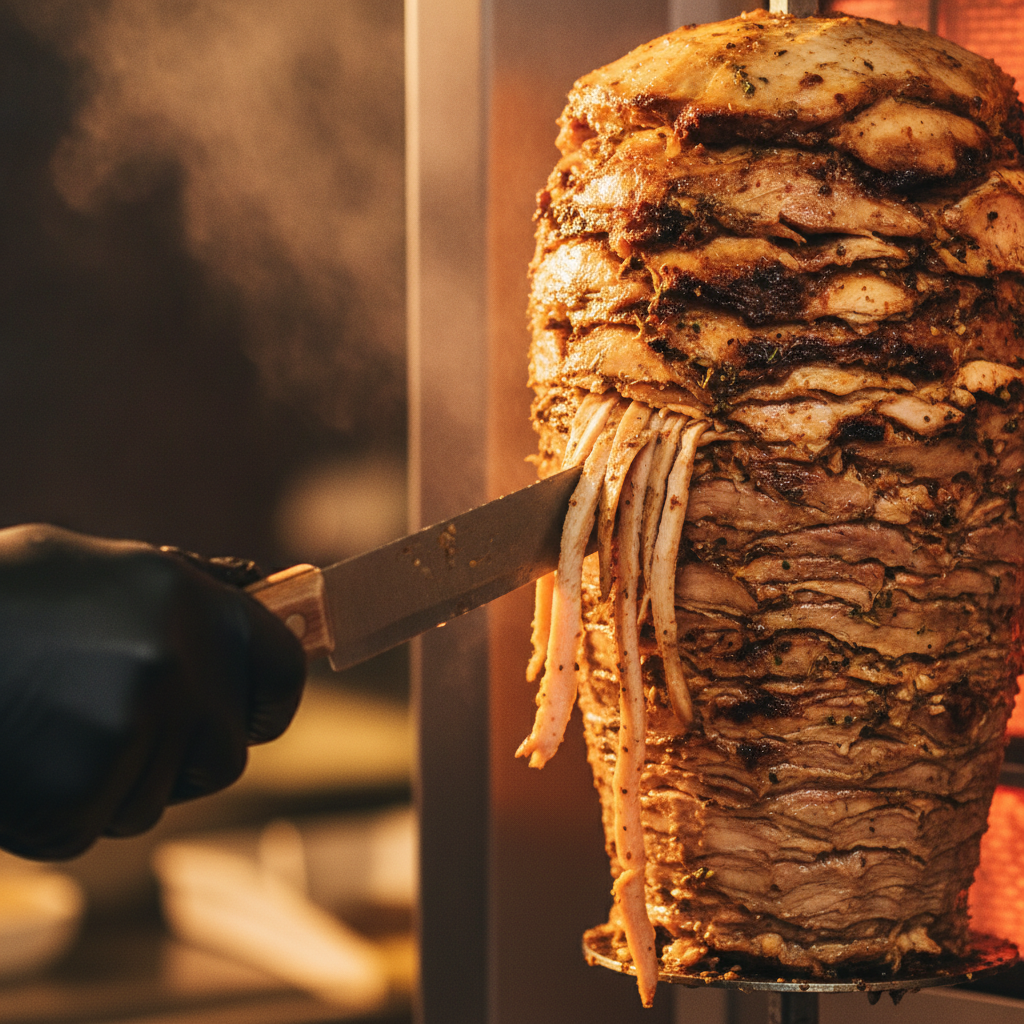
Types/methods: menu and logistics choices that influence totals
Choose menu and logistics with intent: balance proteins and salads, decide on platters or boxed meals, and confirm delivery access. These choices affect prep time, packaging, and staffing—key levers that shape your final total without changing food quality.
Menu decisions shape both the dining experience and the time your team spends managing the line. Balanced platters with chicken and beef shawarma, fresh pita or rice, and two salads keep most groups happy. Boxed meals shine when you’re feeding breakout rooms or moving groups between sessions. For busy offices, clearly labeled sauces and a one-way buffet line can shave 5–8 minutes off peak service.
Menu building blocks
- Proteins: Chicken shawarma, beef, or doner-style meats; add a hearty vegetarian like falafel or grilled veg so everyone has a main.
- Carbs and wraps: Fresh pita or rice; offering both covers low-gluten preferences without complicating service.
- Salads and sides: Shepherd’s salad, tabbouleh, or cabbage slaw add freshness and color contrast on the table.
- Sauces and toppers: Garlic sauce, tahini, hot sauce, pickles—small touches with big satisfaction boosts.
- Desserts and drinks: Baklava, cookies, and sparkling water complete the experience without slowing the line.
Service style comparison
| Service style | What you get | Budget impact | Use when |
|---|---|---|---|
| Drop-off only | Hot, labeled trays delivered to your door | Lowest logistics footprint | Short meetings; in-house team to lay out food |
| Buffet setup | Delivery, table setup, warmers, basic styling | Moderate logistics and time | Town halls, client lunches, community events |
| On-site carving | Chef presence, carving station, refills | Highest staffing and time | Showcase events or VIP moments |
| Boxed meals | Individually packed portions, labeled | Streamlined handoff | Training days, breakout rooms, off-sites |
For an office setting, most teams land on buffet setup because it balances speed and presentation. If you’re in mixed-use spaces or moving between rooms, boxed meals prevent bottlenecks. We explore the trade-offs for office settings on our buffet style office catering page, and we offer flexible portions on build-your-own catering to match headcount precisely.

Local considerations for Old Toronto
- Weekend events near Dufferin Grove Park benefit from wider delivery windows due to foot traffic and parking.
- For subway-adjacent venues near Ossington, plan elevator timing for carts during peak hours to avoid 5–10 minute delays.
- Indoor office lunches run smoother when a building contact reserves the freight elevator and loading zone at least 30 minutes ahead.
Best practices to avoid surprise fees
Eliminate surprises by confirming scope in writing. Finalize headcount, delivery window, access details, dietary needs, and equipment. Ask for an itemized confirmation showing what’s included (serving ware, warmers, cleanup) so nothing appears late as an extra line item.
Hidden fees often show up when details stay fuzzy. A short email that maps your timeline, access notes, and dietary counts can prevent 30–45 minutes of confusion the day of. In our experience, organizers who share a floor plan and a single point of contact cut setup time by 20% and keep food at optimal temperature for longer.
Scope and documentation
- Itemized confirmation: Request a written breakdown of food, delivery, setup, and equipment so you know what’s included.
- Venue details: Share floor level, security sign-in rules, and loading instructions, including any elevator bookings.
- Dietary plan: List vegetarian counts and common allergens for clear labeling and utensil separation.
- Timeline map: Delivery arrival, setup start (usually 20–30 minutes), service window, and pickup/cleanup.
Smart menu strategy
- Core-and-choice: Anchor on two proteins, two salads, and a flexible sauce bar to serve diverse tastes quickly.
- Vegetarian anchor: Include a filling veg option so no one is left with only sides; plan 1 vegetarian per 6–8 omnivores.
- Labeling: Clear labels speed service and reduce duplicate questions by 20–30% at peak.
Execution day tips
- Stagger arrivals: If you expect 80 people at noon, invite half at 11:50 and half at 12:05 to ease congestion.
- Traffic flow: Proteins first, then salads and sauces to prevent bottlenecks; set a separate vegetarian-first lane.
- Refill plan: Keep warmers accessible for fast top-ups without moving guests; assign 1 runner per 40–50 guests.
Curious how this looks in practice? We outline sample buffet maps and portioning approaches on our catering menu options guide, including variations for training days and open houses.
Planning tools and helpful resources
Use a headcount calculator, a labeled menu checklist, and a delivery logistics sheet. Pair those with local food safety guidance and allergen best practices. Together, they align your scope, protect guests, and help the event run on time with no last-minute scrambles.
We provide planners with three lightweight tools: a portions worksheet, a dietary matrix, and a logistics checklist. These live documents streamline decisions that often get left to the last 48 hours. As a rule of thumb, confirm headcount T-minus 5 business days, delivery access T-minus 3 days, and dietary counts T-minus 2 days. That cadence reduces rescheduling and keeps prep on track.
- Headcount and portions worksheet: Map agenda length to portions with a 5–10% buffer for walk-ins.
- Dietary matrix: Track vegetarian, vegan, gluten-friendly, and nut-aware requests in one place.
- Logistics checklist: Loading zone, elevator schedule, table count, and available outlets for warmers.
For a party-planning perspective on why Middle Eastern platters work across mixed groups, skim this regional party planning article. If you want to compare how different providers describe service styles, this Toronto shawarma catering overview is a useful example from the broader market.
Mini case studies: how factors shift totals
Two similar events can land at different totals based on service style and logistics. Choosing drop-off versus on-site carving, or planning wider delivery windows, reshapes labor and time—often without changing core menu quality.
These snapshots show how identical headcounts travel different paths depending on service and access. Notice how small choices—like boxed meals for breakouts or reserving the freight elevator—shorten lines and reduce handling by 10–20 minutes. None of this changes the flavor; it simply respects timelines and teams.
Startup town hall, 60 minutes
- Goal: Feed 40 during an all-hands with limited setup time.
- Plan: Drop-off, pre-labeled trays; two proteins, two salads, pita, sauces.
- Result: Fast line, minimal cleanup, zero overtime with building security.
Agency client lunch, 90 minutes
- Goal: Impress clients visiting from out of town.
- Plan: Buffet setup with warmers, styled salads, and a dessert finish.
- Result: Smooth pacing, on-time agenda, and positive feedback on labeling.
Community social near the park
- Goal: Serve mixed ages with outdoor seating.
- Plan: Wider delivery window, extra plates and napkins, bottled drinks.
- Result: Simpler logistics; volunteers managed service confidently.
For additional layouts tailored to offices, we’ve documented equipment, table maps, and service timing on our individual catering and corporate catering pages. Those examples show how we translate headcount into trays, labels, and a clean handoff.
Frequently Asked Questions
Plan early, share venue details, and confirm dietary needs to avoid last-minute changes. For smooth service, label everything and set a realistic delivery window. Choose the service style that matches your agenda and available help on site.
How far in advance should I book shawarma catering?
Book as soon as your date and rough headcount are set. For weekday lunches, a week is ideal; for larger or weekend events, secure your spot earlier. Early booking helps with staffing, labeling, and delivery windows that match your agenda.
What service style is best for office lunches?
Drop-off works well when you have help to lay out food. Buffet setup adds speed and polish for bigger groups. On-site carving is a showcase option when you want a live station and continuous refills.
How do you handle vegetarian or gluten-friendly needs?
We recommend planning a hearty vegetarian main and labeling gluten-friendly items clearly. Separating tongs and setting a small vegetarian-first line can reduce cross-contact and help guests move confidently through the buffet.
What details help delivery and setup go faster?
Share a building contact, elevator instructions, and where the buffet should go. Reserve the loading area if possible. Clear directions save minutes and keep the team focused on food quality and temperature.
Key takeaways
Decide service style, right-size portions, and confirm access details early. Label everything and allow a realistic setup window. With clear scope and a responsive partner, you’ll maximize value and avoid hidden fees—without sacrificing food quality or guest experience.
- Service style drives logistics; match drop-off, buffet, boxes, or carving to your agenda.
- Lock headcount 3–5 days out and keep a 5–10% buffer for walk-ins.
- Reserve loading and elevators to save 10–15 minutes per trip and protect food temperature.
- Label sauces and vegetarian mains to speed lines and build confidence.
- Get an itemized confirmation so inclusions don’t turn into last-minute add-ons.
Conclusion and next steps
To control your total, align menu, headcount, service style, and logistics early—then confirm inclusions in writing. You’ll maximize value and eliminate surprises. When you’re ready, choose a partner who cooks authentically, labels clearly, and communicates fast.
How much shawarma catering costs depends on a handful of decisions you can make today. Start with the service style that fits your venue and agenda. Right-size portions to your timing and guest mix. Share delivery details early to avoid delays, and ask for an itemized confirmation so everyone’s aligned.
- Explore staffed options on our corporate catering page.
- Prefer flexibility? See build-your-own catering to dial in trays and salads.
- Planning a warehouse or hybrid crew lunch? Skim our warehouse staff catering notes for pacing and access tips.
Planning an Old Toronto event? Our team can suggest a balanced shawarma menu, label everything for dietary clarity, and coordinate delivery windows that match your agenda.
Reach out to explore drop-off, buffet setup, or on-site carving options that fit your timeline.