
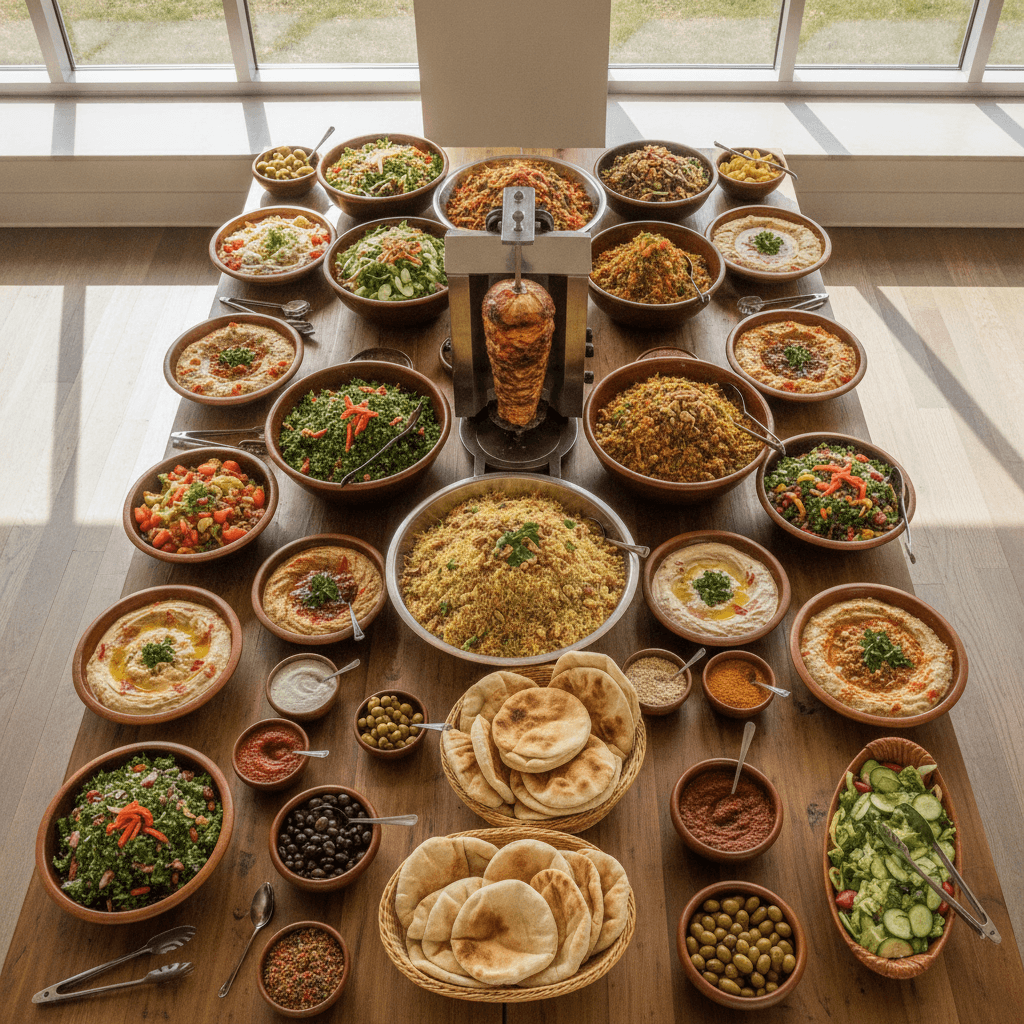
Catering portion planning is the process of estimating how much food to order per guest so everyone eats well without excess waste. The right portions balance proteins, sides, breads, and sauces across meal types and appetites. In Old Toronto, understanding guest mix and event timing helps you choose catering portions with confidence.
By Shawarma Moose • Last updated: June 29, 2026
Introduction
Choosing catering portions means translating guest counts into proteins, sides, breads, and beverages that match the event style and time. Start with benchmarks, adjust for your audience, and confirm with your caterer. This guide shows you the exact steps we use at Shawarma Moose for reliable results.
Food that runs out too soon deflates an event; too much food increases waste. We wrote this how-to for Old Toronto teams, planners, and hosts who want a simple, reliable way to portion shawarma and Turkish cuisine for any gathering.
In our experience serving offices, schools, and private events across the neighborhood, the events that feel “just right” share the same planning habits. You’ll see them below as benchmarks, adjustments, and quick checks you can apply immediately.
- Translate guest count into balanced portions for proteins, sides, salads, and breads
- Adapt for event type: lunch meeting, reception, or full dinner
- Account for dietary needs (vegetarian, vegan, gluten-free)
- Use quick math checks to prevent shortages and reduce waste
- Lock in delivery, labeling, and setup that keeps lines moving
Overview
Start with baseline servings per person, then tune for event length, time of day, and guest profile. Plan 10–15% extra for high-appetite groups. Confirm vegetarian and allergen-friendly counts early. Finally, validate with your caterer’s tray yields so your math aligns with real pans.
Here’s how the method fits together at a glance before we go deep:
- Baselines: Set default servings per person by course.
- Adjustments: Modify for lunch vs. dinner, age mix, and activity level.
- Validation: Cross-check your plan against real tray yields.
- Logistics: Confirm delivery window, setup, and flow.
- Labeling: Mark allergens and dietary options clearly.
Food safety and clarity matter as much as the math. Keep this in mind as you finalize portions and service style.
Local considerations for Old Toronto
- Transit timing affects appetites and arrival patterns. If your team walks from Ossington, add 5–10% buffer for late arrivals and second helpings.
- Summer events near Dufferin Grove Park run hotter and longer. Plan extra hydration and an additional cold salad pan.
- Old Toronto offices often have compact boardrooms. Choose half pans and staggered delivery to ease setup in smaller spaces.
Before You Start (Prerequisites)
Gather three inputs before you size food: the accurate guest list (with diet notes), the event format and timing, and the caterer’s real tray yields. With these, you can convert headcount into servings that match how people actually eat.
What you need to know first
- Final headcount window: Ask for RSVPs 3–5 days prior; lock numbers 24–48 hours ahead.
- Dietary breakdown: Track vegetarian/vegan counts, gluten-free, and any allergens.
- Event format: Buffet, boxed meals, or family-style platters.
- Timing & length: Lunch vs. dinner, 45-minute huddle vs. 2-hour social.
- Appetite profile: Youth sports team? Light workshop? Plan portions accordingly.
Useful tools and info from your caterer
- Tray yields: How many servings per pan of shawarma, rice, salad, and sides.
- Serving utensils: Tongs, ladles, and portion spoons to control serving size.
- Allergen list: Clear labeling for sesame, dairy, tree nuts, etc.
- Delivery details: Staging location, elevator access, and serving line plan.
We make it easy to align your plan with real pans and platters. See our catering overview and available build-your-own packages for flexible portioning.
How to Choose Catering Portions: Step-by-Step
Use a three-pass approach: set baselines per guest, adjust for event context, then validate against actual tray yields. Add a 10–15% buffer for hungry crowds and 5% for setup losses. Finish with a quick math check for proteins, carbs, salads, sauces, and breads.
Step 1 — Set baseline servings per guest
- Proteins (shawarma): 5–6 oz cooked meat per adult at lunch; 6–8 oz for dinner.
- Vegetarian mains: 6–8 oz cooked legumes or grilled veg per vegetarian/vegan guest.
- Rice or grains: 1–1.25 cups cooked per person.
- Salads: 1–1.5 cups per person across mixed salads.
- Pita/bread: 1.5–2 pieces per person (increase with dips).
- Dips & sauces: 2–3 tablespoons per item per person.
As a quick orientation, casual receptions trend 10–20% lighter than seated meals. Long, social events trend heavier as guests revisit the table.
Step 2 — Adjust for context
- Time of day: Late lunches and evening events skew higher portions.
- Event length: Add 10% if service exceeds 90 minutes.
- Audience: Youth athletes or construction crews? Add 15% protein.
- Menu variety: More choices drive slightly smaller portions per item but higher total intake.
We’ve found Old Toronto tech teams on sprint days eat about 10% more at working dinners than at noon standups. Plan your buffer accordingly.
Step 3 — Validate with real tray yields
- Convert your plan into pans and platters using your caterer’s yield chart.
- Ensure proteins, carbs, and salads scale together so the line stays balanced.
- Map vegetarian items to actual trays, not just headcount.
Cross-check yields with our corporate catering packages and buffet-style options designed for smooth self-serve lines.
Step 4 — Sanity-check with quick math
- Proteins: Adult lunch = 6 oz; adult dinner = 7–8 oz; kids = 3–4 oz.
- Vegetarian mains: 6–8 oz per vegetarian/vegan.
- Salads & sides: 2–3 sides per person, 1 cup each.
- Pita: 1.5–2 pieces per person.
- Sauces: 2–3 tbsp per person per favorite sauce.
Double-check totals against a guest list segmented by appetite and dietary needs. It’s normal to add a small buffer for setup loss and seconds.
Step 5 — Confirm food safety and holding
Safety protects your guests and your event. Factor in chafers and insulated carriers when you plan service time and tray rotation.
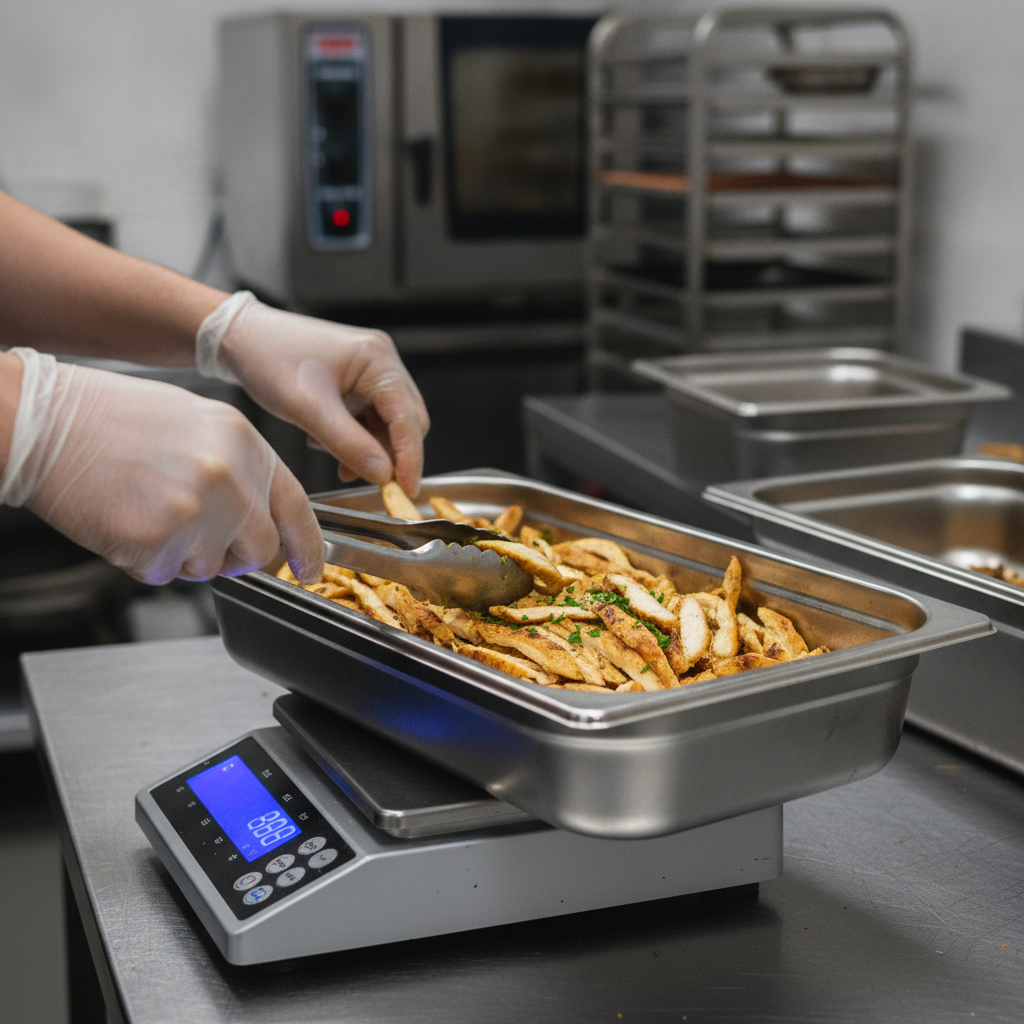
Step 6 — Finalize setup, labeling, and flow
- Labeling: Clearly mark beef, chicken, vegetarian mains, and allergens.
- Line flow: Proteins first, then carbs, salads, sauces, and pita last.
- Refill plan: Stage backup pans; refresh high-traffic items first.
For speed and clarity, we include signage and simple labeling with our individual and platter-style catering. Clear labels reduce bottlenecks and questions.
Portion benchmarks by event type
Use these practical ranges as a starting point. Tune them using your guest profile and event length.
| Event Type | Protein (cooked) | Rice/Grains | Salads | Pita/Bread | Sauces/Dips |
|---|---|---|---|---|---|
| Working Lunch (45–60 min) | 5–6 oz/guest | 1 cup/guest | 1 cup/guest | 1.5 pcs/guest | 2 tbsp/item |
| Reception (light bites) | 3–4 oz/guest | 0.5–0.75 cup/guest | 1–1.25 cups/guest | 1–1.5 pcs/guest | 2 tbsp/item |
| Seated Dinner (90+ min) | 6–8 oz/guest | 1–1.25 cups/guest | 1–1.5 cups/guest | 2 pcs/guest | 3 tbsp/item |
| Kid-Friendly Event | 3–4 oz/child | 0.75–1 cup/child | 0.75–1 cup/child | 1 pc/child | 1–2 tbsp/item |
Troubleshooting: When Portions Go Sideways
If lines are slowing or trays are draining fast, rebalance the flow: swap utensils to smaller portioners, prioritize refills on proteins, and open backup salads. For leftovers, cool quickly and store safely. Communicate changes fast to keep guests confident.
If you’re running low too fast
- Swap to slightly smaller tongs or ladles to normalize servings.
- Refill proteins first; guests anchor their plate around them.
- Open a secondary salad or grain pan to spread demand.
- Reposition sauce favorites to two locations to reduce bottlenecks.
If you’ve clearly over-ordered
- Pivot to pre-made wraps for later distribution.
- Offer grab-and-go boxes as guests leave (ask your caterer to include compostable containers).
- Track the overage against your baseline for the next event; cut 10–15% on similar groups.
Food waste is preventable with better planning. We recommend logging final counts after each event to tighten your future estimates.
Food safety reminders
Keep hot foods hot and cold foods cold. Reheating poultry should reach 165°F. Proper labeling reduces risk for allergy-sensitive guests. The FDA lists nine major food allergens; confirm which appear on your menu, and label them visibly.
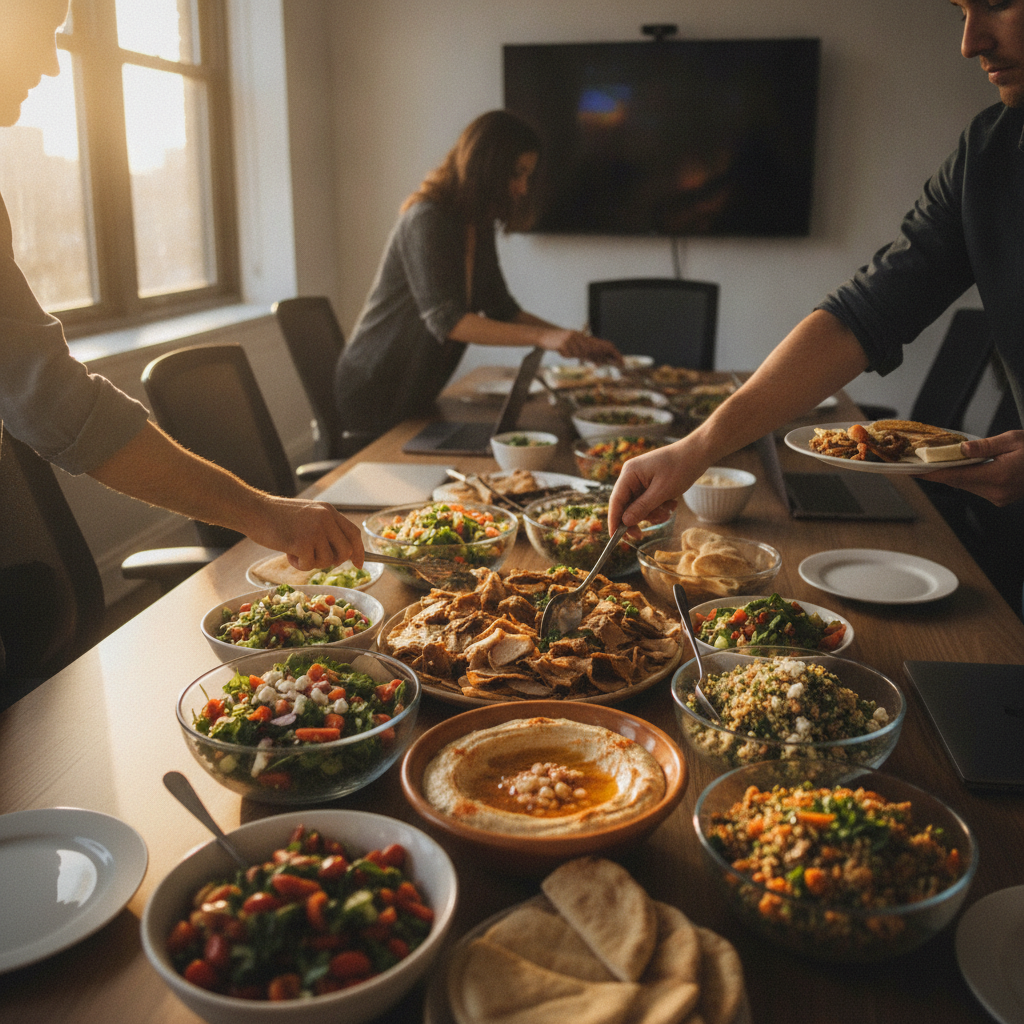
Advanced Tips (Portion Planning Like a Pro)
Model portions by appetite segments—light, average, and hearty—then blend to match your guest list. Cap maximums with portion tools, and stage backup trays to open only if needed. This approach controls waste while keeping guests fully satisfied.
Segment by appetite, not just headcount
- Assign each guest to light, average, or hearty appetite (30/50/20 split is common).
- Multiply portions by segment, then sum totals for a more accurate plan.
- Increase hearty share for late events or highly active groups.
Use portion-control tools
- Provide 2–3 sauce ladles sized around 1 tbsp to manage demand.
- Place pita last to prevent stack-ups early in the line.
- Offer pre-portioned salad bowls when you expect tight timelines.
Vegetarian and vegan math
- Don’t just “subtract meat”; ensure a full, satisfying plant-based main.
- Plan equal calories and protein so vegetarian guests aren’t left with only sides.
- Mark vegan items clearly to prevent dairy cross-over.
Shawarma Moose offers both buffet-style and individual catering for teams that prefer pre-portioned meals. It’s a strong option when meeting agendas are packed and breaks are short.
Frequently Asked Questions
Plan portions by starting with per-person baselines, adjusting for timing and appetite, then validating against actual tray yields. Label allergens clearly and confirm vegetarian counts in advance to keep every guest comfortable and well-fed.
How do I estimate shawarma per person?
Plan 5–6 oz cooked meat per adult for lunch and 6–8 oz for dinner. For hearty groups or late events, add 10–15%. Provide a full vegetarian main at 6–8 oz per vegetarian or vegan guest so everyone gets a balanced plate.
What portion changes for buffet vs. boxed meals?
Buffets encourage small seconds, so plan a 5–10% buffer. Boxed meals are pre-portioned, so you can stick close to baselines. If your meeting is tight on time, boxed or individually labeled meals keep lines moving and reduce waste.
How should I plan for allergies and labeling?
Collect allergy info with RSVPs and label every tray. The FDA recognizes nine major allergens; verify which appear on your menu and use separate utensils for each dish to prevent cross-contact.
What food safety rules matter most for catered shawarma?
Hot foods should be held at safe temperatures and poultry should reach 165°F before serving. Chafers and insulated carriers help maintain temps. Build a small buffer, label clearly, and coordinate flow. With this system, you’ll feed every guest well and minimize leftovers.
- Start with per-person baselines for proteins, grains, salads, breads, and sauces.
- Adjust for timing, length, appetite mix, and menu variety.
- Validate against your caterer’s tray yields and serving tools.
- Label allergens, stage backups, and manage flow with smart utensil choices.
Key takeaways
- Use a three-pass method: baseline → adjust → validate.
- Add 10–15% for hungry crowds; 5% for setup losses.
- Proteins anchor the plate—refill them first.
- Clear labeling speeds the line and protects guests.
If you’re planning an event in Old Toronto, we’re happy to translate your guest list into a right-sized order. Explore the Shawarma Moose catering page or our event menu guide, then reach out to lock your date.
Additional Resources
Use authoritative food safety and allergy resources while you finalize portions. Then align your numbers with your caterer’s tray yields. These references keep guests safe and your plan realistic.
- Food safety best practices: CDC Food Safety
- Allergen guidance: FDA Food Allergies
More catering guides
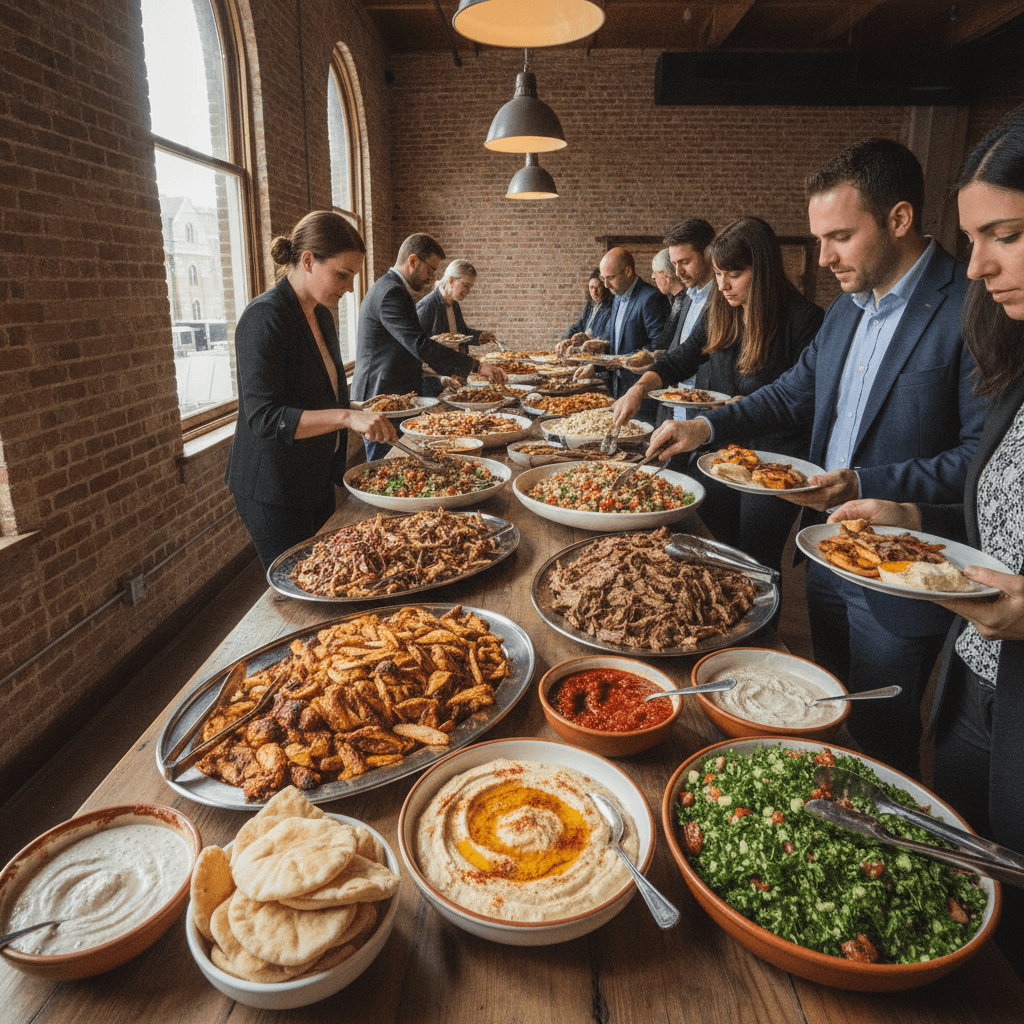
Hungry yet? Get a catering quote.
From a board lunch to a wedding feast — tell us the date and headcount and we'll send options within a few hours.