The short answer: choose a buffet when the group has a real lunch break, a clear serving area, and wants to choose portions and combinations. Choose boxed lunches when the meeting continues through lunch, meals must reach different rooms, or a named dietary selection needs to reach a specific guest. If your answers are split, a hybrid order can be better than forcing the whole event into one format.
For a Toronto company event, the better option is rarely decided by guest count alone. A 30-person workshop in a tight boardroom may need boxes, while a 100-person staff social with a cafeteria can run smoothly as a buffet. Start with the room, agenda, receiving route, and dietary handoff; then compare the complete cost.
Buffet vs boxed lunches: the side-by-side answer
| Decision factor | Buffet catering | Boxed lunch catering |
|---|---|---|
| Best for | Team socials, shared lunch breaks, celebrations, and events with a dedicated serving area | Working lunches, workshops, executive meetings, multi-room events, and timed handoffs |
| Room requirement | One or more tables for trays, utensils, plates, and a guest line | A receiving or distribution point; no shared serving line is required |
| Guest choice | Guests can choose their own mix and portion from the available menu | Each guest receives the meal selected before the event |
| Dietary handoff | Options can be identified, but shared utensils and line flow need a plan | Names or dietary labels can make one-to-one distribution simpler |
| Agenda fit | Better when the schedule includes time to queue, serve, and sit | Better when lunch must start quickly or continue beside the meeting |
| Packaging | Fewer individual meal containers, with shared trays and service items | More individual containers, but easier room-by-room distribution |
| Current Shawarma Moose starting points | Build Your Own Shawarma Bar from $12/person; Mediterranean Signature Buffet from $13/person | Individually packaged wraps from $10 each, without sides; beef +$1; bowls from $12/person |
These are published food-price starting points, not an event quote. Delivery, requested add-ons, disposables, equipment or staffing, and 13% HST are separate where applicable. Compare the same inclusions on both sides before deciding that one format is cheaper.
When a buffet is better for a company event
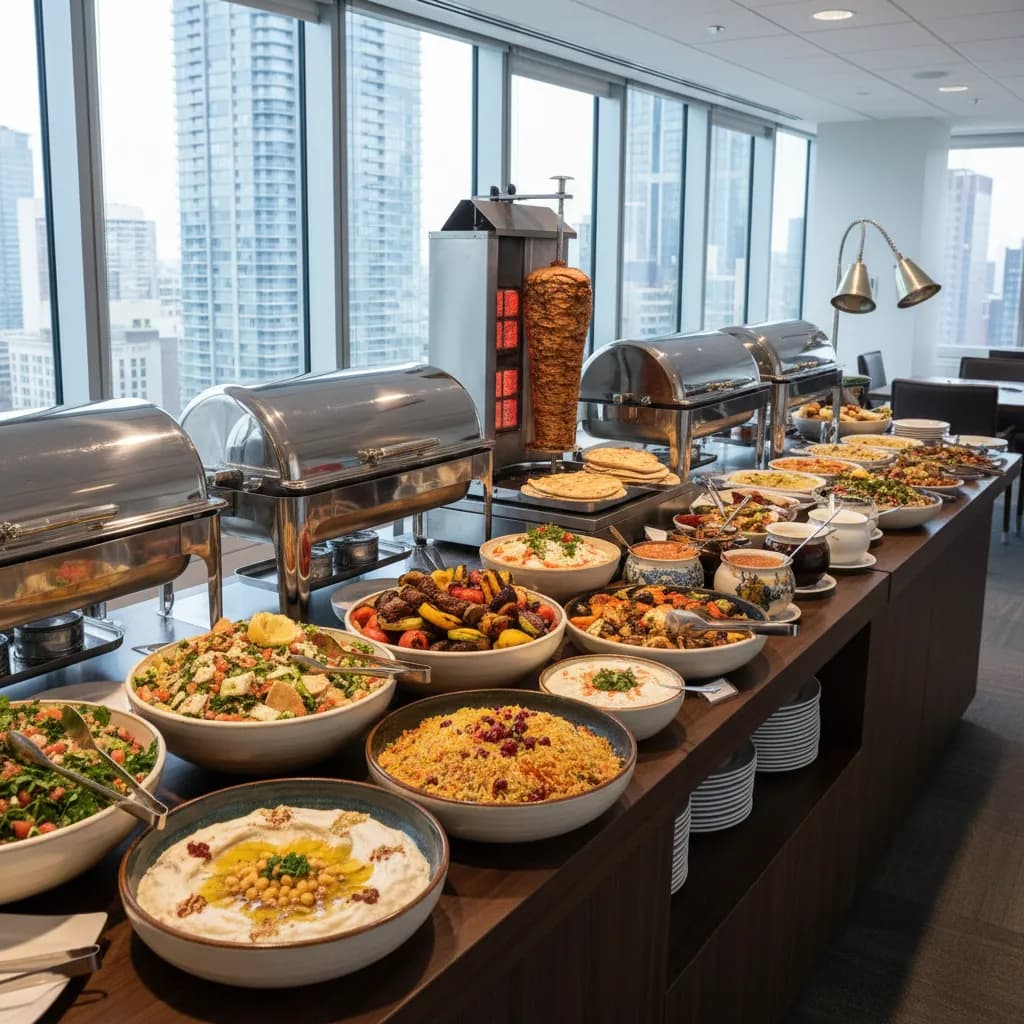
A self-serve buffet is usually the better experience when lunch is part of the event rather than something people eat while working. It gives guests a visible choice of proteins, bases, salads, and sauces, and it lets people decide how much of each component they want.
Choose a buffet when these conditions are true
- The agenda has a defined lunch or social break.
- The room has a stable table or counter for hot trays, cold sides, plates, and serving utensils.
- Most guests will arrive within the same service window.
- The organizer wants the meal to feel communal and flexible.
- The venue can keep the serving line away from doors, presentation screens, and narrow walkways.
The operational question is not simply, “Do we have a table?” The serving area must also let guests approach, choose food, and move away without crossing the people still waiting. For larger groups, the venue may need more than one access point or a plan to release tables in stages. Confirm the room, floor, reception desk, elevator, parking, and loading instructions before delivery; a street address alone does not explain how food reaches the event.
A buffet does require more organizer attention at service time. Someone must know where the trays belong, which utensils go with which dishes, and how dietary selections will stay identifiable. Do not describe a drop-off buffet as a live station: Shawarma Moose provides a Mediterranean Signature Buffet in serving trays, while equipment, setup help, or on-site staffing must be confirmed in the quote.
When boxed lunches are better
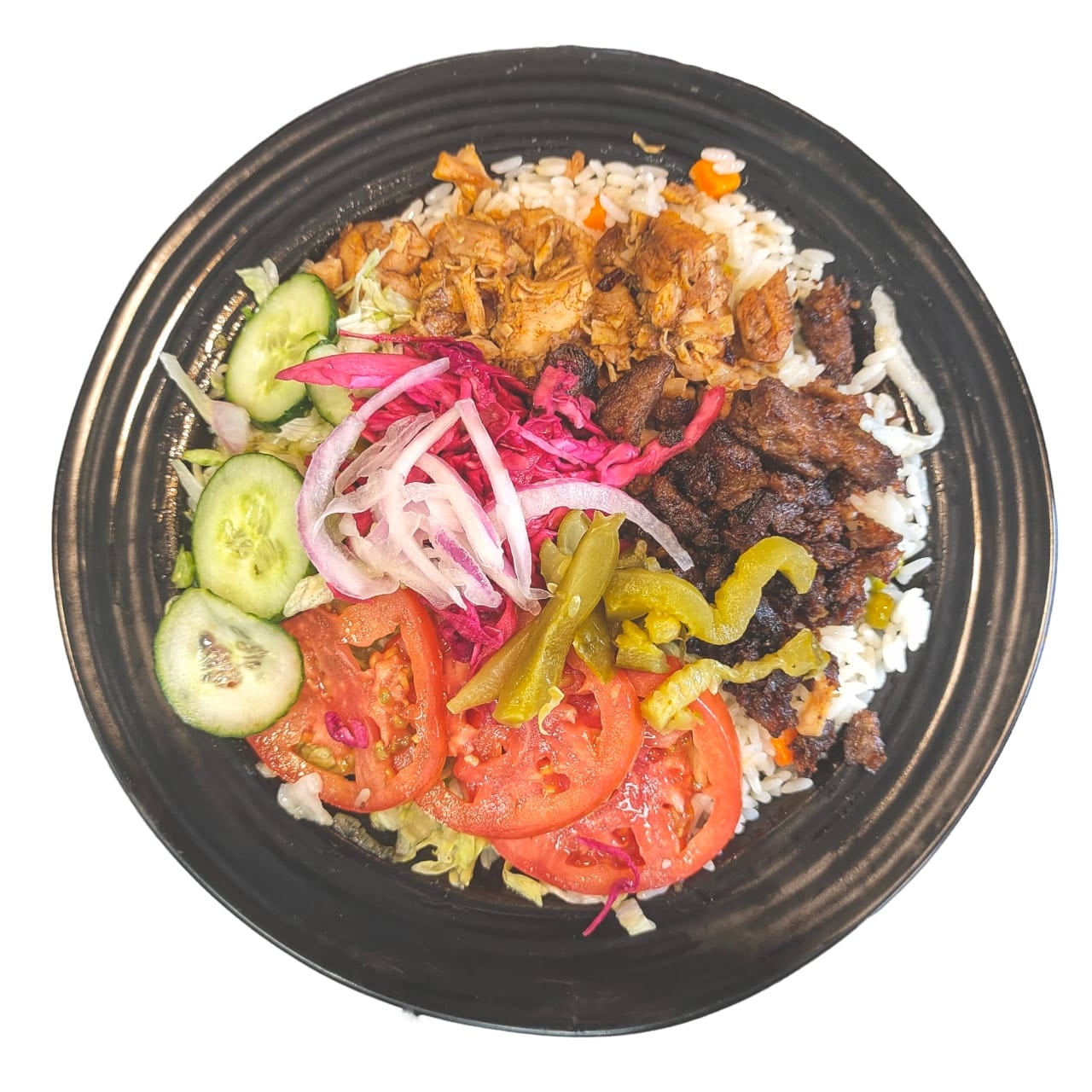
Individually packaged bowls and wraps win when control and speed matter more than self-service. Each meal can be assigned by protein or dietary selection, carried to a desk or breakout room, and handed to one person without asking them to move through a buffet line.
Choose boxed lunches when these conditions are true
- The presentation or training continues through lunch.
- Guests are seated in a boardroom, classroom layout, or several breakout rooms.
- The organizer has collected individual meal selections or dietary requirements.
- The venue has limited counter space or does not permit a buffet setup.
- Lunches must be distributed by team, floor, shift, or guest name.
Boxes are not automatically effortless. The organizer still needs a final count, a receiving contact, a distribution plan, and a clear way to separate meal types. A printed room list or a grouped delivery order can matter more than an elaborate menu. If names are requested, send the spelling and meal choice before the kitchen cutoff.
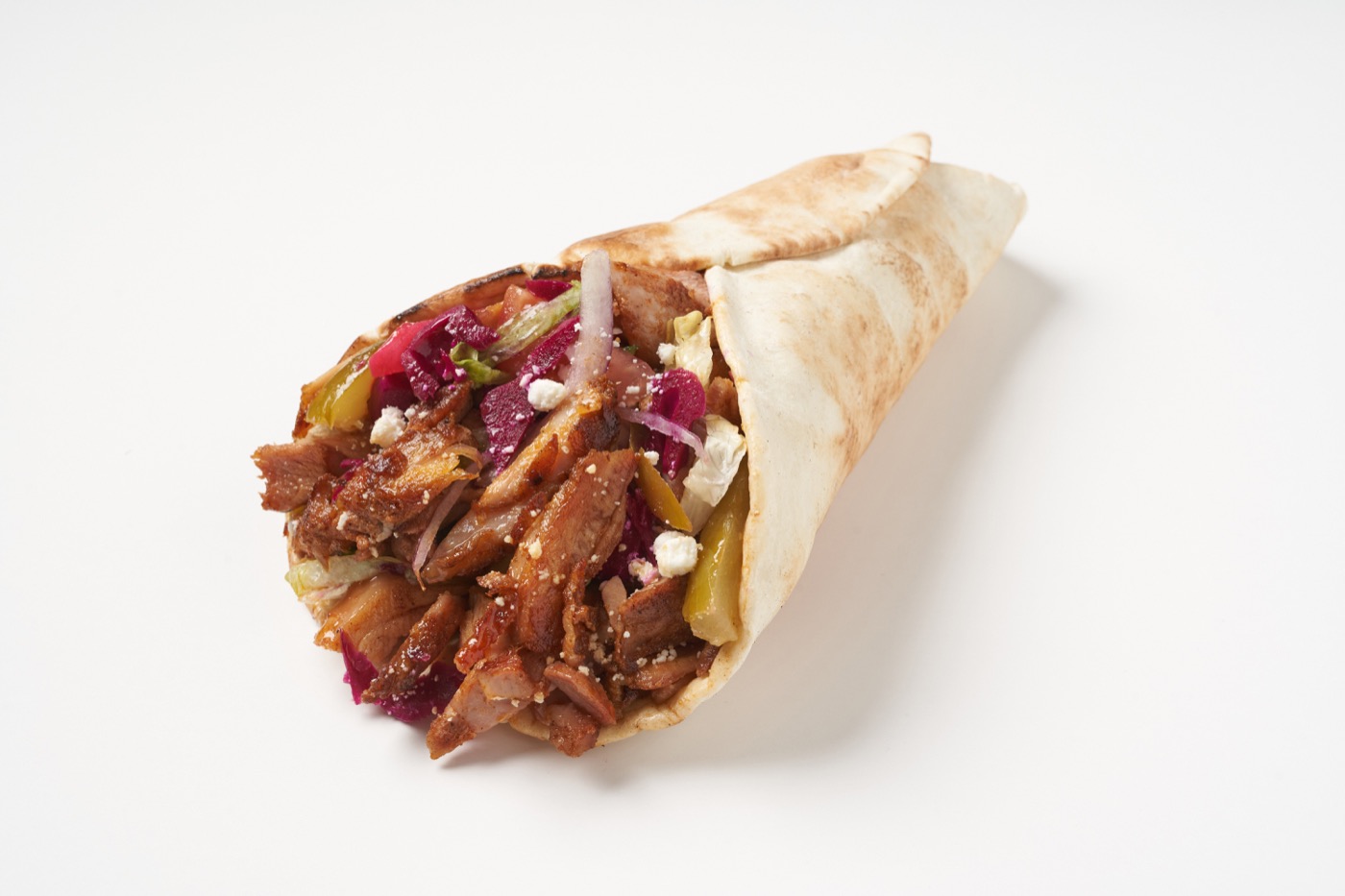
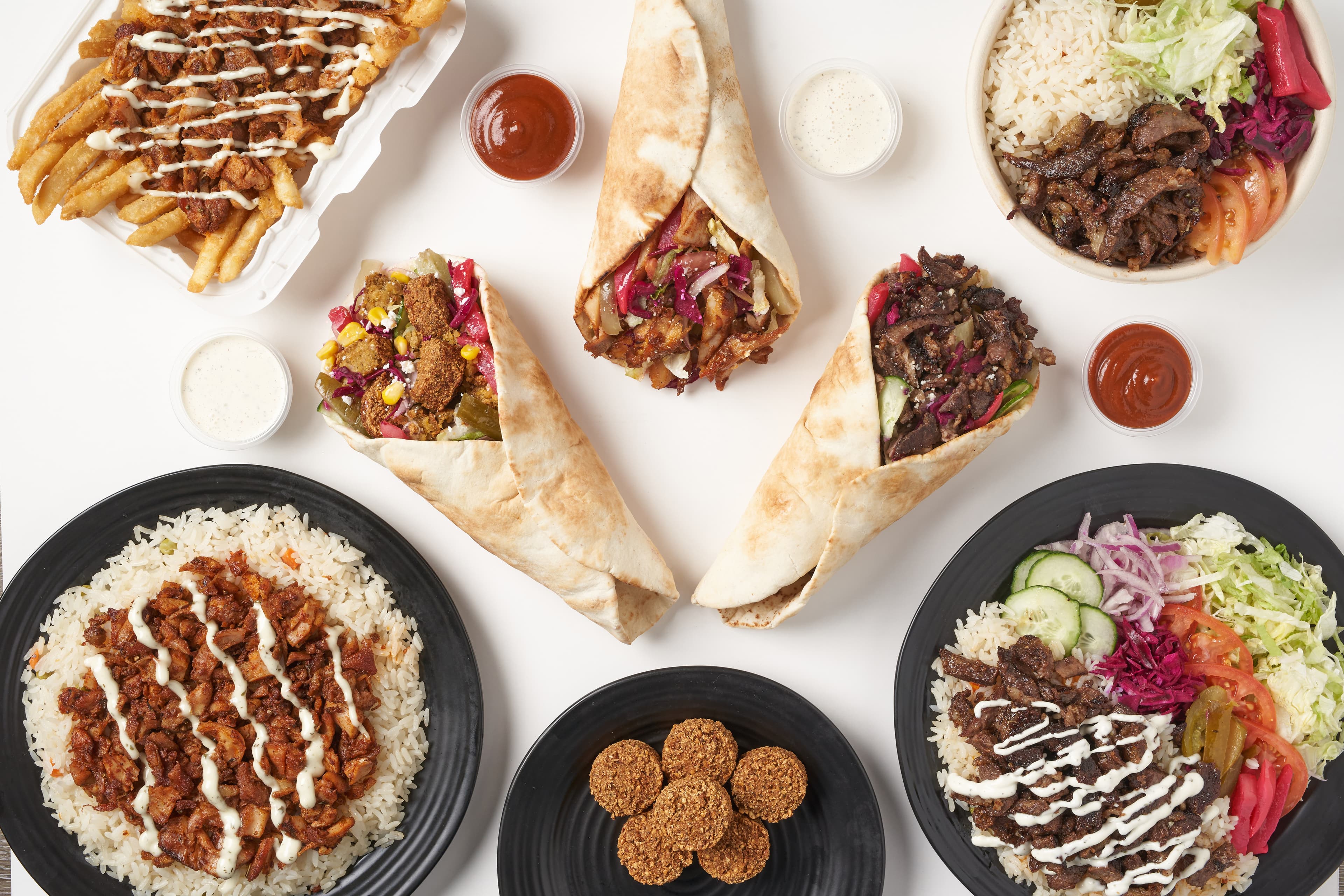
Shawarma Moose individually packaged bowls are $12/person, for the listed chicken shawarma, beef shawarma, falafel or tofu selections; extras and custom requests are separate. Individually packaged wraps start at $10 each for chicken or falafel, or $11 for beef, without included sides. Sauces can be packed on the side, and guest-name labels can be requested. The exact ingredients and labels should always be confirmed in the itemized quote.
Which format fits each type of company event?
Board meetings and executive lunches
Boxed meals are usually the cleaner choice. They reduce movement during the meeting and let the organizer place one meal at each seat. For a shorter meeting with no dietary complexity, a wrap platter can be a useful third option: it uses a shared tray but needs less setup than a full buffet.
Training days and workshops
Use boxes if participants eat at their workstations or return to sessions in under 30 minutes. Use a buffet if the agenda includes a proper break and the venue has a separate lunch space. For multi-room training, group boxed meals by room rather than sending every attendee to one collection point.
Staff appreciation lunches and company socials
A buffet usually feels more generous and social because guests can see the full spread and make their own plate. It also works well when arrival time is flexible within a defined lunch window. Review the corporate lunch catering and office catering options against your room plan.
Conferences and multi-session events
The agenda decides. Boxes work for a working lunch that must reset quickly or reach multiple breakout rooms. A buffet works for a longer common lunch in a ballroom or cafeteria. A conference can also use both: boxed lunches for speakers and special meals, with a buffet for the main guest group. See the conference catering planning page for the broader event format.
Outdoor or off-site company events
Start with the site rules. Confirm access, table availability, shelter, waste handling, and how far food must travel after the delivery vehicle stops. Boxes are easier to hand out when there is no serving furniture. A buffet can still work when the organizer has stable tables and a protected serving area.
Buffet vs boxed lunch pricing in Toronto
The lowest advertised price does not always identify the lower-cost event. A buffet may begin at a lower food price, while boxes may reduce the equipment or service items the room needs. The only fair comparison uses the same guest count and includes food, protein upgrades, add-ons, delivery, disposables or staffing if requested, and tax.
Here is an illustrative 50-person comparison using current Shawarma Moose starting prices and the standard $40 delivery fee:
| Example | Food | Delivery | HST | Illustrative total |
|---|---|---|---|---|
| Mediterranean Signature Buffet at $13/person | $650.00 | $40.00 | $89.70 | $779.70 |
| Boxed bowls at $12/person | $600.00 | $40.00 | $83.20 | $723.20 |
This example is not a quote and assumes no upgrades, add-ons, equipment, staffing, or optional service items. It shows why a base-price comparison should include HST and delivery. Use the catering cost calculator for a planning range, then request an itemized quote for the actual event.
Buffet vs boxed lunches for Turkish and Mediterranean catering
If you are searching for Turkish or Mediterranean catering for a Toronto company event, the format decision stays the same: choose the service style that fits the room and agenda first, then build the cuisine within it. Mediterranean and Middle Eastern menus work in both formats because proteins, rice, potatoes, salads, pickles, pita, and sauces can be served as shared components or portioned into individual meals.
In a Mediterranean Signature Buffet, the spread includes chicken shawarma, falafel, seasoned rice, garlic potatoes, Greek salad, turnips and pickles, garlic sauce, tahini, and hot sauce. Beef shawarma is an optional $1-per-person upgrade; pita and tabbouleh are not included. Guests choose their own combination from the items ordered. In a boxed bowl, the kitchen portions the base, salad, protein, and sauces for one guest. The flavour direction can be similar; the service experience is different.
For cuisine-specific planning, compare Shawarma Moose’s Mediterranean catering and Middle Eastern catering pages. If the search term “Turkish catering” brought you here, confirm the exact dishes you want rather than relying on the cuisine label alone. Menus vary by caterer, and an itemized list prevents surprises.
How to plan halal, vegetarian, vegan, and allergy-related meals
All meat served by Shawarma Moose is 100% halal. Falafel provides a vegan protein option, and rice, potatoes, salads, and sauces can create additional vegetarian, vegan, dairy-free, or gluten-conscious combinations when the confirmed ingredients fit the guest’s needs. Review the halal catering options and send the dietary list before the order is finalized.
For a buffet, identify the dietary dishes and assign separate serving utensils. This improves clarity, but a shared serving area still requires guests and organizers to manage utensil movement and cross-contact. For a boxed lunch, a label can connect a specific meal with a specific person, which is usually the simpler handoff for allergies or tightly controlled choices.
Shawarma Moose is not a shared kitchen. Dedicated allergen preparation areas, equipment, fryers, utensils, and storage are available. Tell the kitchen the specific allergen—not only a preference—before booking so the requested meal can be reviewed and confirmed. Do not assume that “gluten-conscious,” “vegan,” or “halal” answers every ingredient question.
When a hybrid order is the smartest choice
A company event does not have to choose one format for every person. A practical hybrid can use:
- A buffet for the main group, plus individually labelled meals for guests whose selections need a controlled handoff.
- A buffet in the main lunch room, plus boxes for speakers, reception staff, or teams that cannot leave their stations.
- Boxes for the first shift and a buffet for a later team social, with each delivery window quoted separately.
- Wrap platters for a small boardroom and a buffet for the larger staff group.
Tell the caterer the count for each format, not only the total headcount. Hybrid orders become confusing when the organizer knows there are “about 60 people” but has not separated 48 buffet guests, 8 boxed meals, and 4 dietary-specific meals.
A five-question decision checklist
- Will people stop working to eat? A real break points toward buffet; an uninterrupted session points toward boxes.
- Is there room for a serving line? If trays, utensils, plates, and guests would block the room, choose boxes or platters.
- Must a specific meal reach a specific person? Named boxes usually make that handoff easier.
- Is everyone eating in one place and at one time? One shared room supports a buffet; multiple rooms, floors, or shifts support boxes or a hybrid.
- What is the complete budget? Compare the final food, delivery, add-on, service-item, and HST totals—not only the headline price per person.
Simple decision rule: choose buffet for choice plus a shared break; choose boxes for control plus a tight schedule; choose a hybrid when the room or dietary plan clearly contains both situations.
What to send when requesting a quote
A useful catering request gives the planner enough information to recommend a format and price the complete event. Include:
- Event date and the exact time guests will eat
- Confirmed and tentative headcounts
- Company, venue, full address, room, floor, and receiving instructions
- Agenda: working lunch, defined break, social event, conference, or shift meal
- Available tables or serving area
- Dietary selections and allergies, with names if individual labels are needed
- Preferred format, or permission for the caterer to recommend one
- Target budget and requested add-ons, disposables, equipment, or staffing
If the better option is still unclear, use the Shawarma Moose catering quote form and describe the room and schedule in the notes. Those details are usually more useful than saying only “corporate lunch for 50.”
Vegan and vegetarian guests: buffet or labelled bowls?
A shared buffet can work when the whole group wants one plant-based menu. Individually labelled falafel bowls can make the handoff simpler when a few guests need different meals, or when everyone has a short lunch break. The decision is about service and confirmed ingredients, not just whether the menu lists falafel.
Compare the vegan and vegetarian catering plans for the actual group. Vegan plans exclude feta and tzatziki; vegetarian options can include them after the kitchen confirms ingredient suitability. Neither label automatically covers allergies or gluten-related requirements. Ask for the complete recipe, including dressings, bread and dessert.
For a mixed order, count each guest once and identify the menu for every meal. A request for 10 vegan bowls within a 50-person event is 10 plant-based meals plus 40 other meals to confirm, not 50 bowls. The quote should show the split, labels, delivery details and optional supplies. The meal-count planning worksheet helps organise that information without assuming a dietary percentage.
Frequently asked questions
Is a buffet or boxed lunch better for an office meeting?
Choose boxed lunches when the meeting continues through lunch, guests sit in separate rooms, or named dietary labels matter most. Choose a buffet when the group has a defined break, enough serving space, and wants more choice.
Which is cheaper: buffet catering or boxed lunches?
The Build Your Own Shawarma Bar and Boxed Lunch Bowls both start at $12 per person; Mediterranean Signature is $13 and individual wrap meals are $12–$14. Compare the same guest count, included food, extras, delivery, service items and 13% HST. For 50 people with one $40 delivery and HST, standard bowls total $723.20 and Mediterranean Signature totals $779.70 before extras.
Are boxed lunches only for small company events?
No. Boxed meals can work well for large events when distribution is planned by room, team, floor, or shift. Guest count alone does not decide the format; the agenda and handoff plan do.
Can a company event order both buffet and boxed meals?
Yes. A hybrid order can use a buffet for the main group and individually labelled meals for specific guests, rooms, or roles. Give the caterer a separate count for each format.
Can a mixed-diet group use a buffet?
Yes, when dietary dishes are identified and shared utensils and guest flow are planned. Individually packaged meals are usually simpler when one specific meal must reach one specific guest.
How far ahead should a Toronto company order catering?
Shawarma Moose accepts same-day catering with at least four hours' notice and a 10-person minimum. Earlier notice gives an organizer more time to coordinate labels, multiple formats, equipment, staffing, or complex venue access.